
I. Interior space and its materials
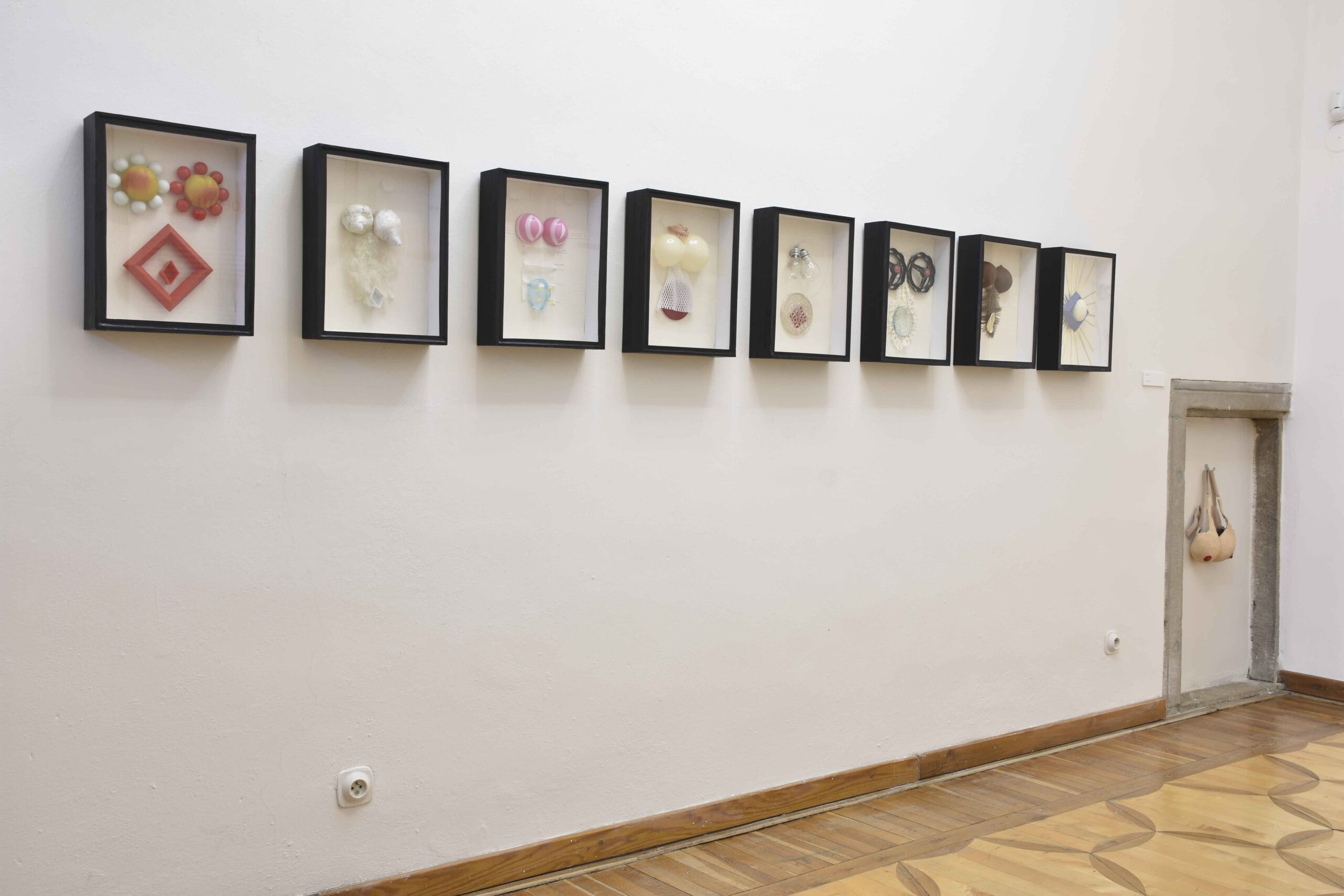
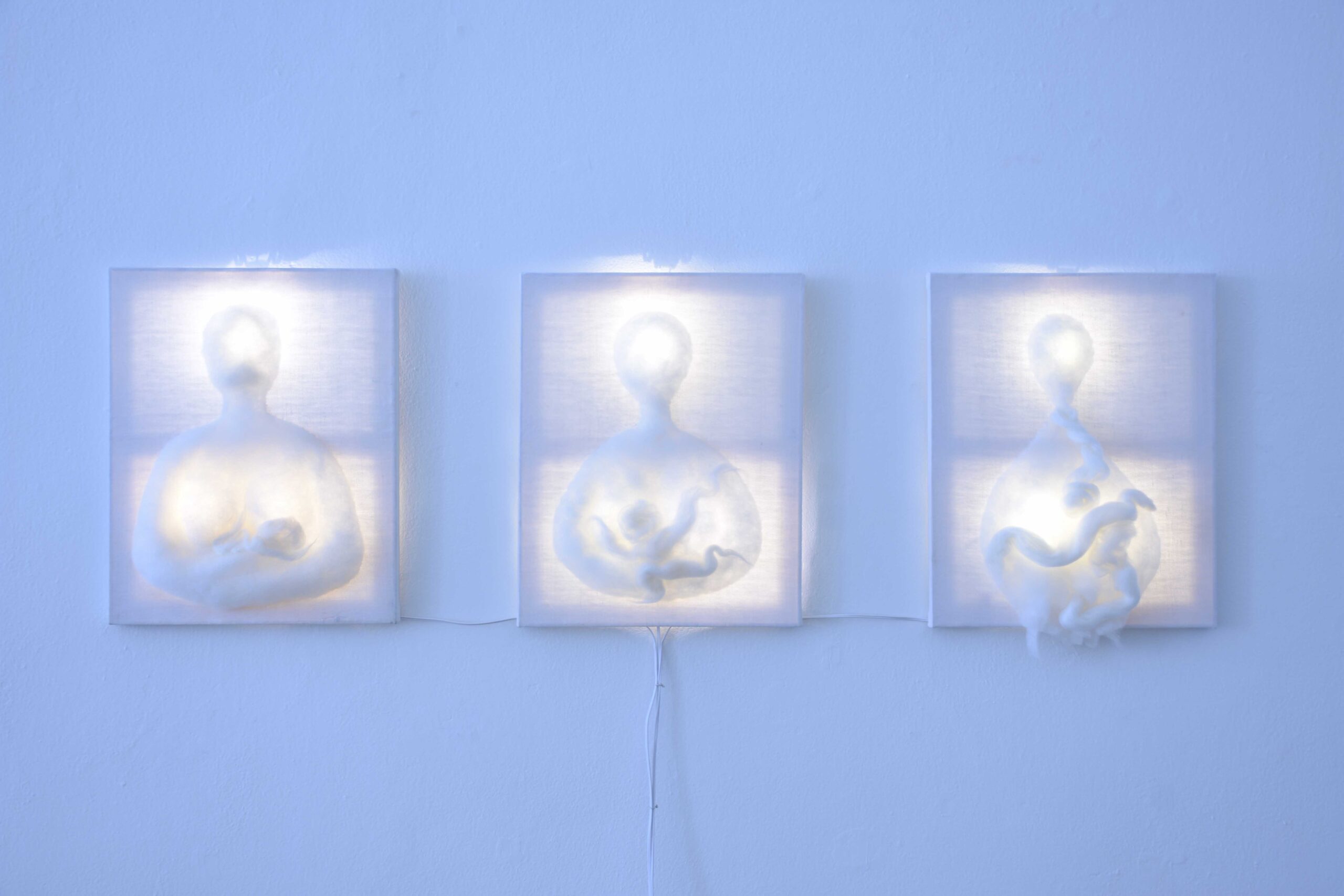
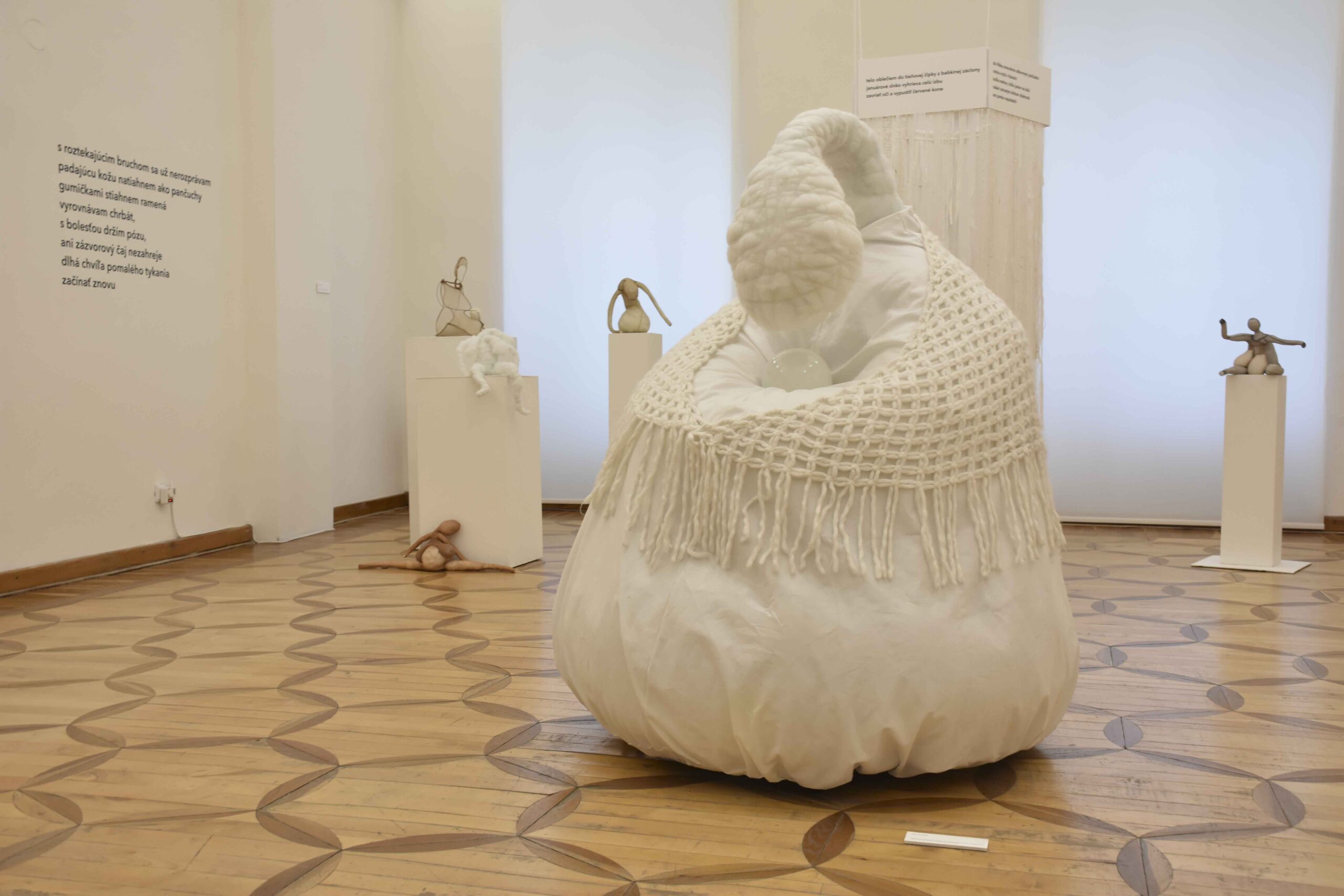
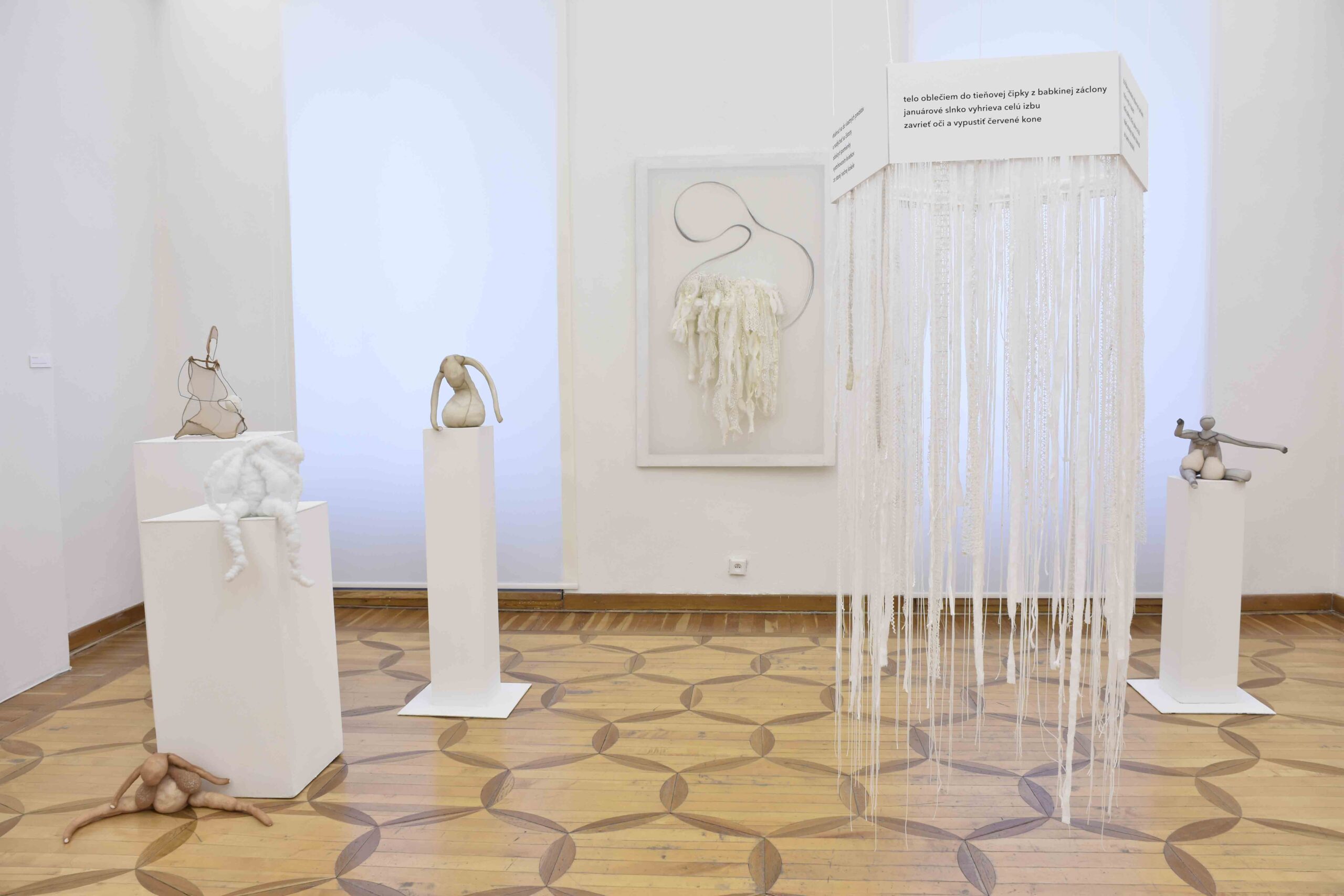
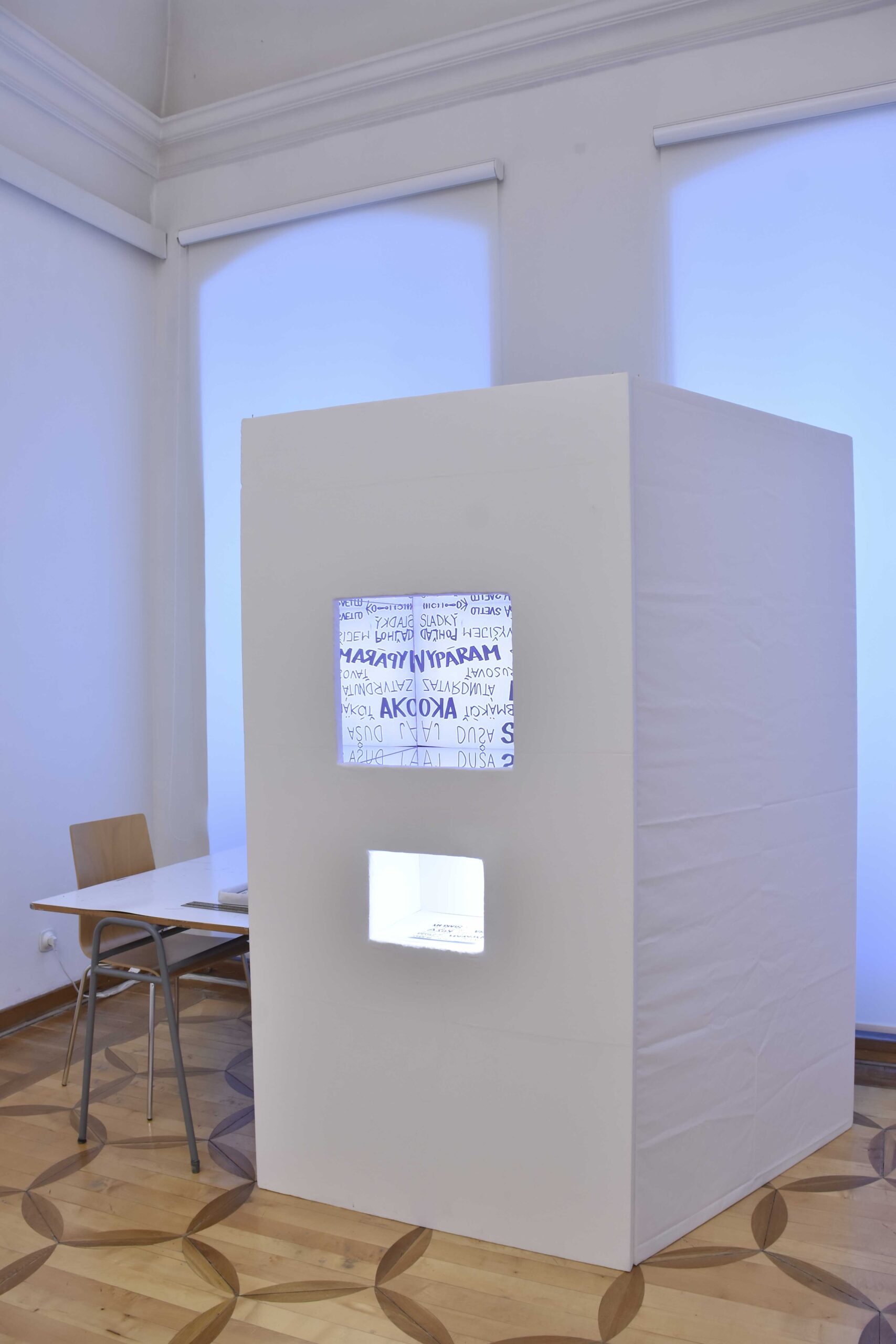
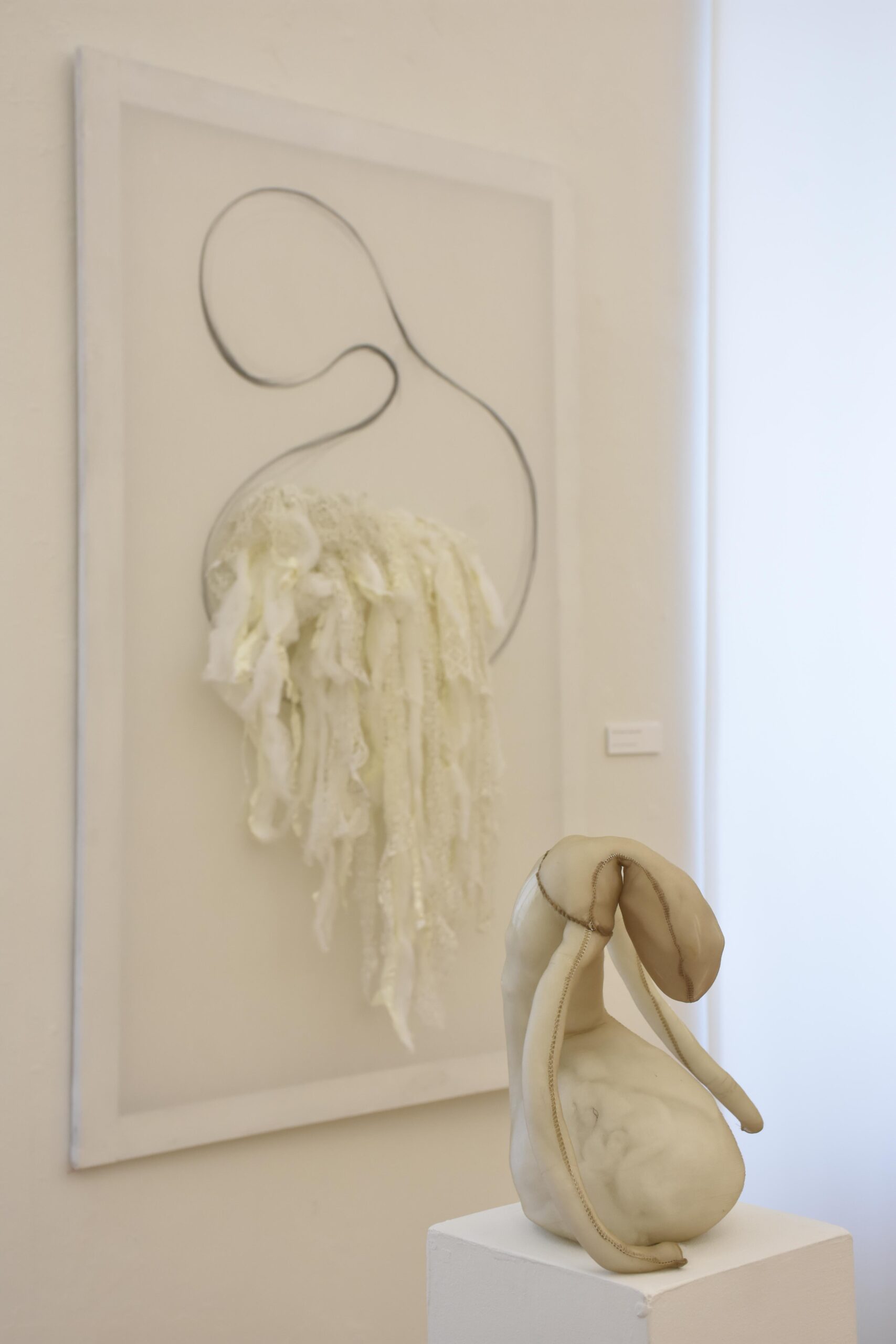
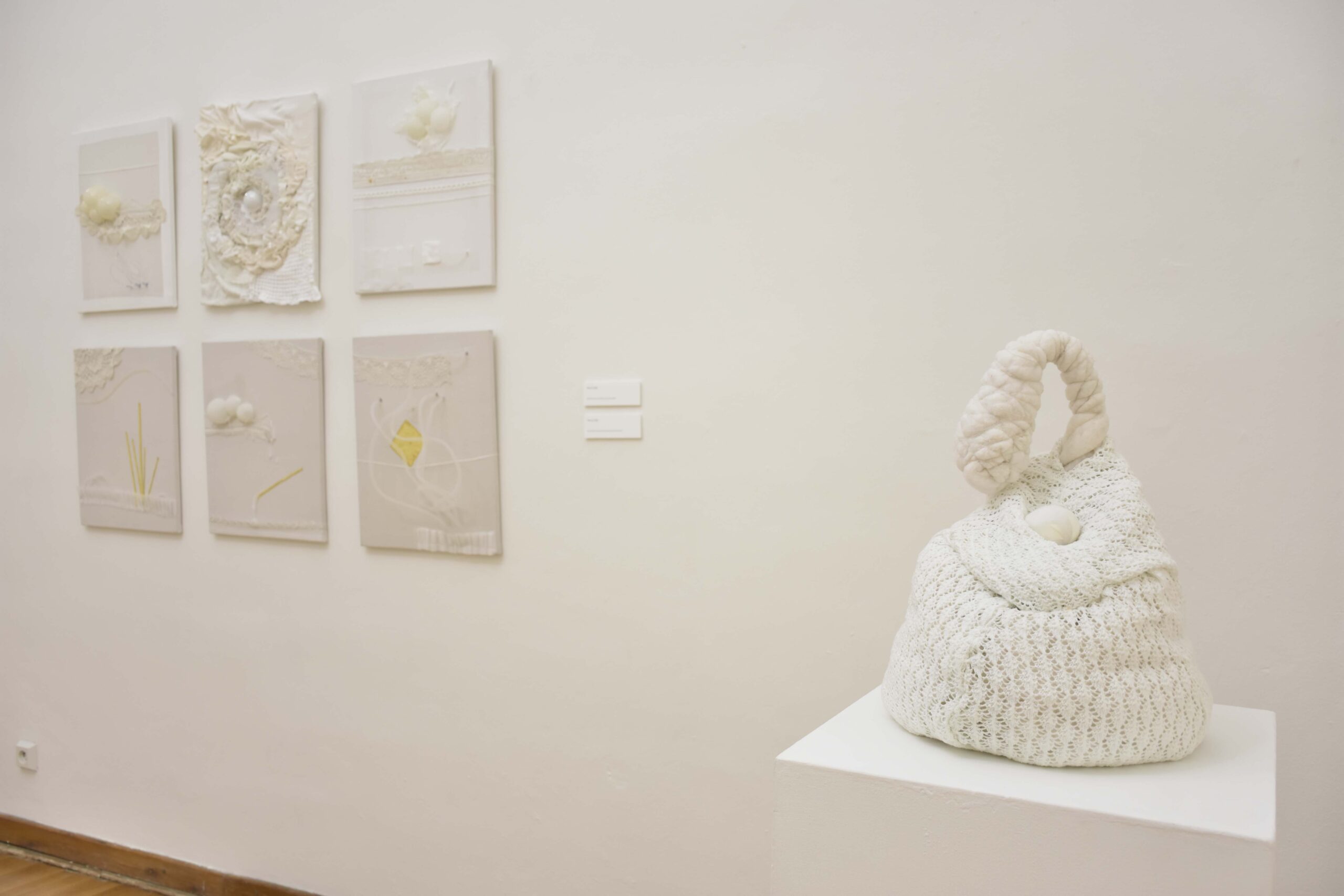
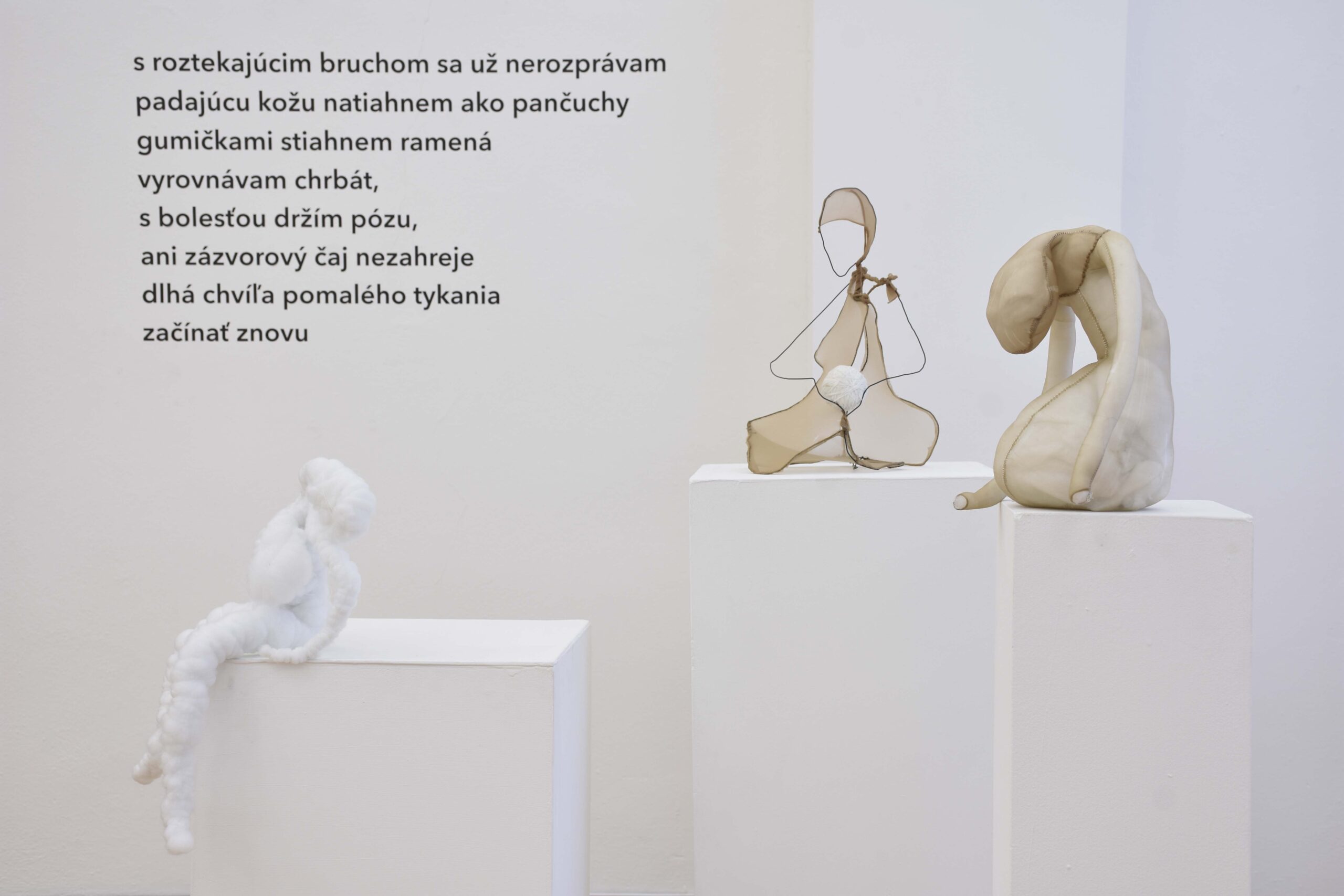
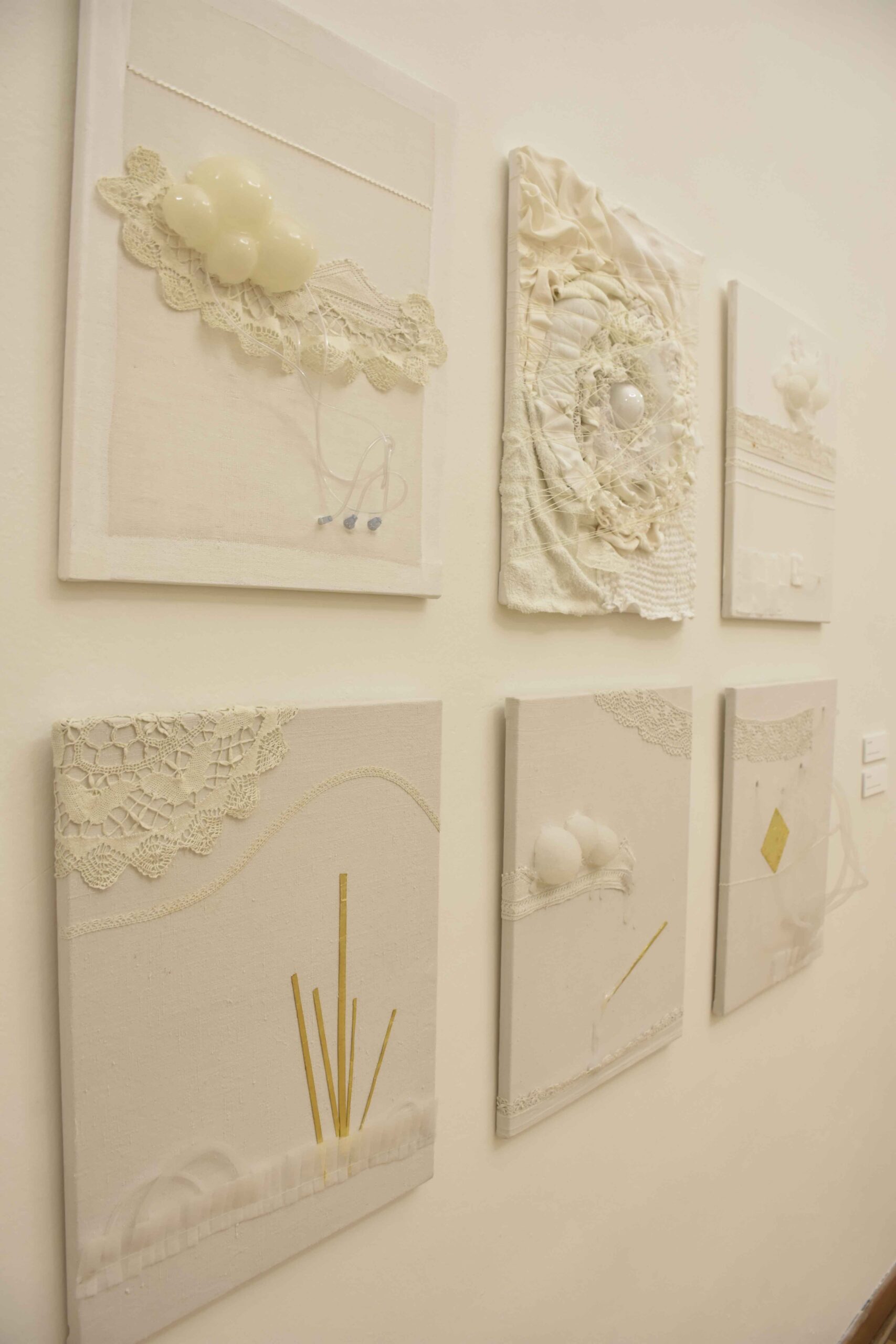
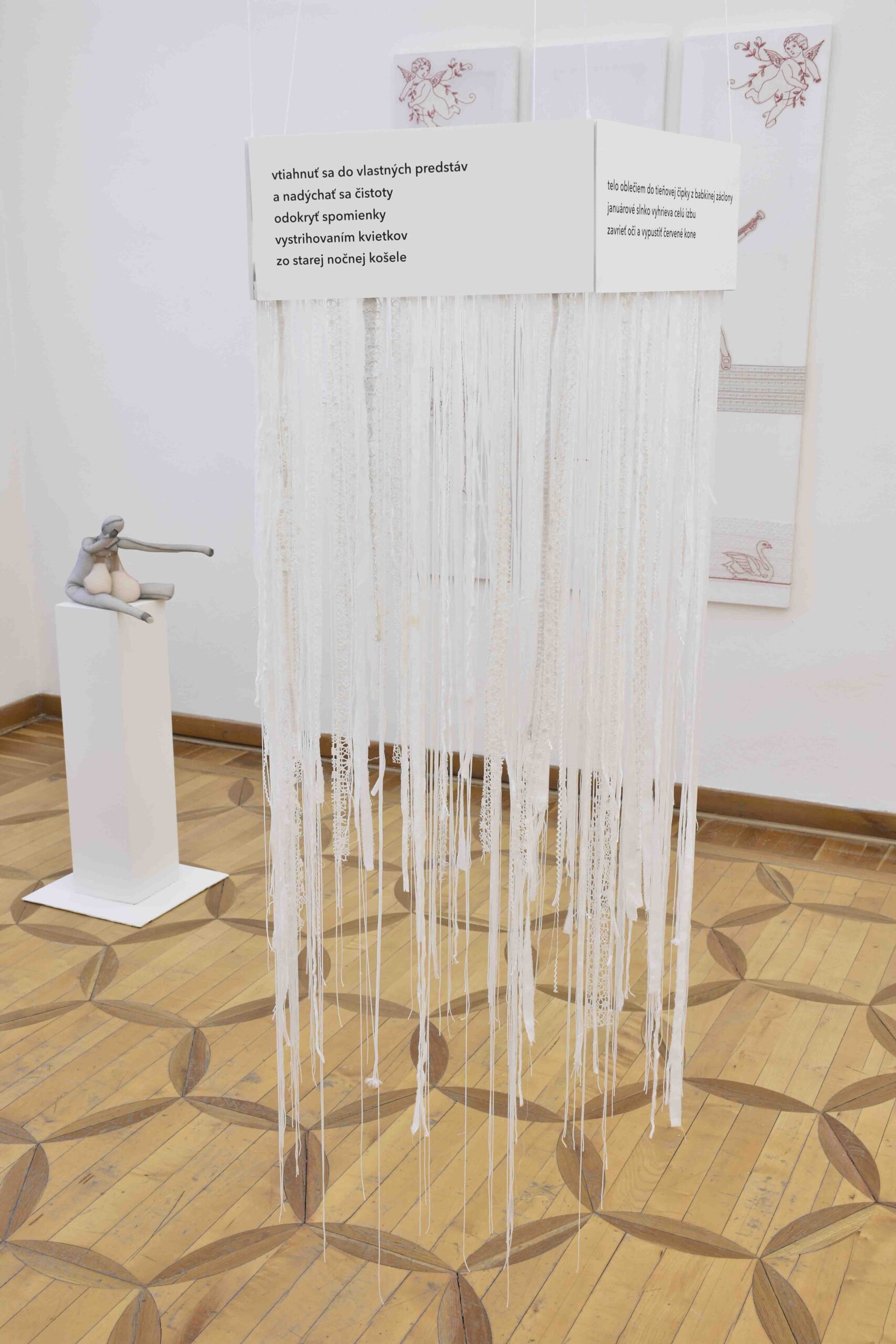
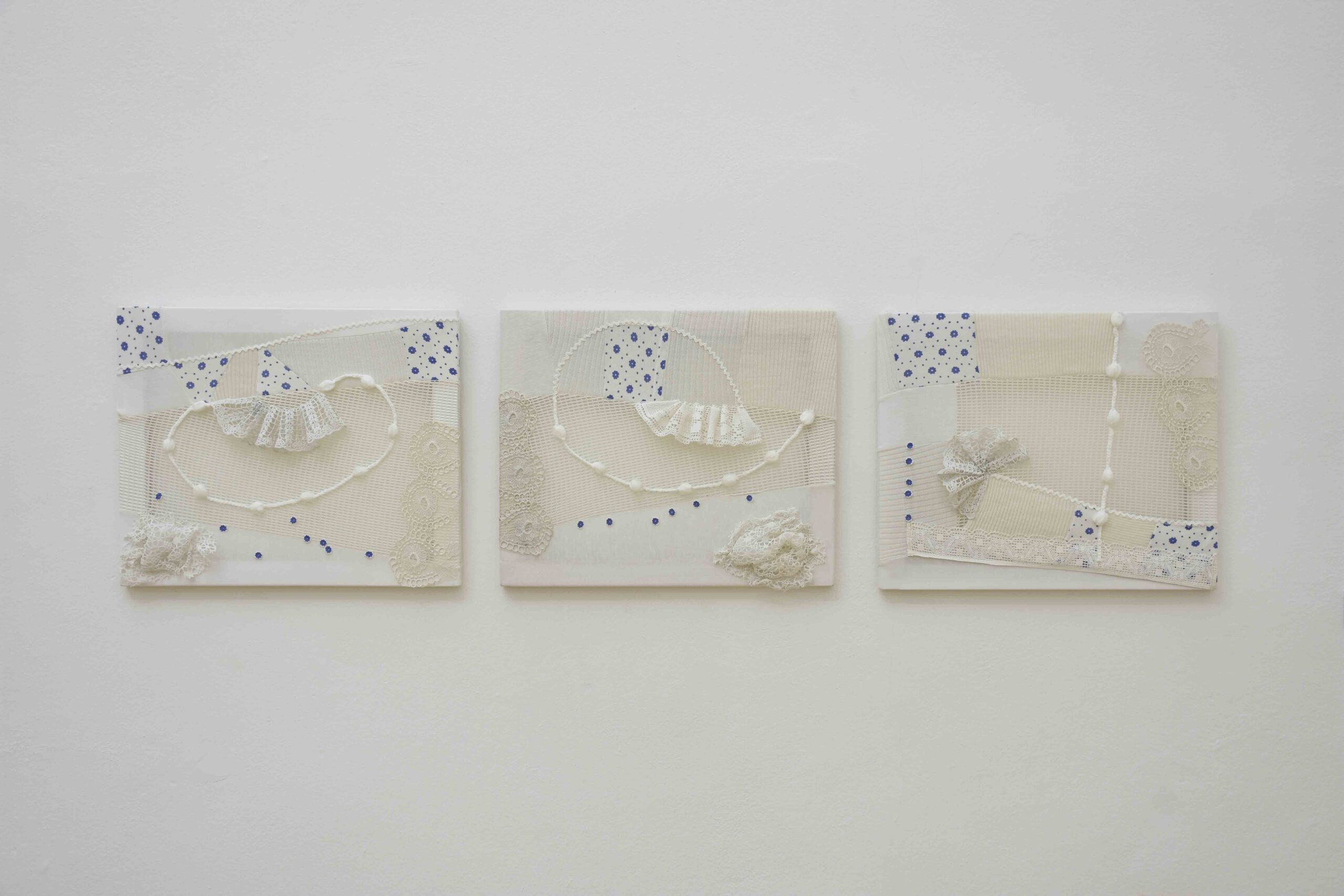
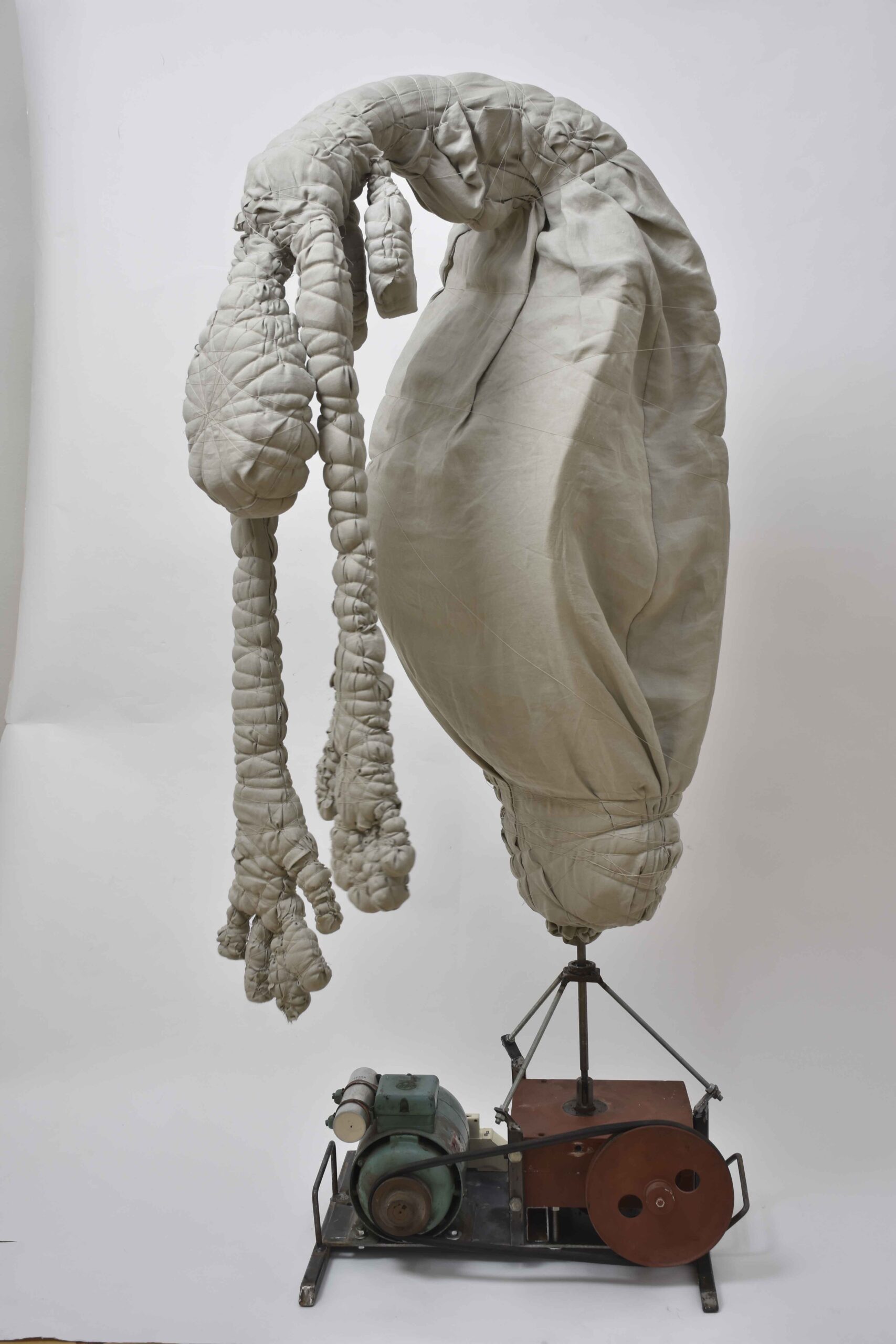
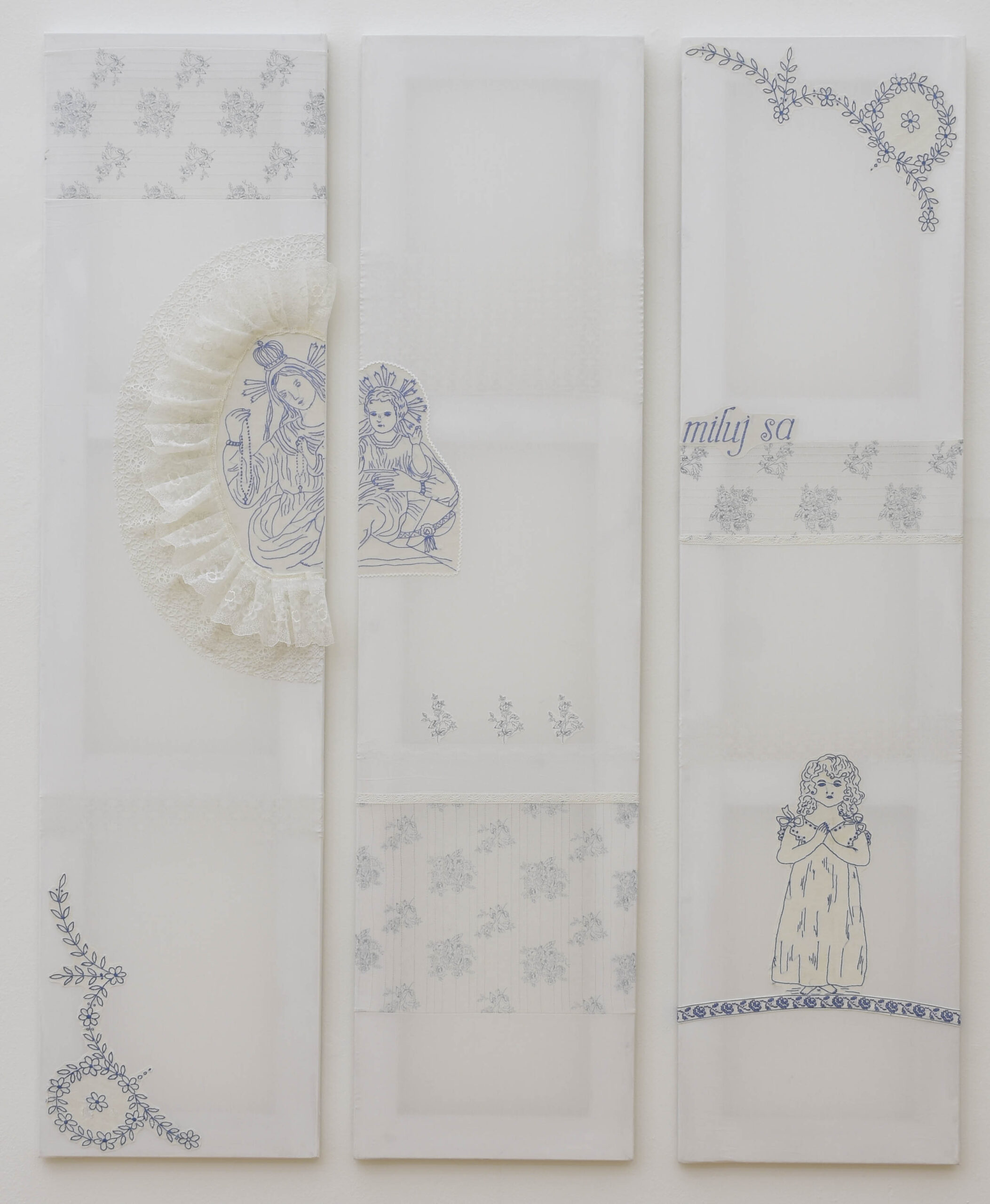
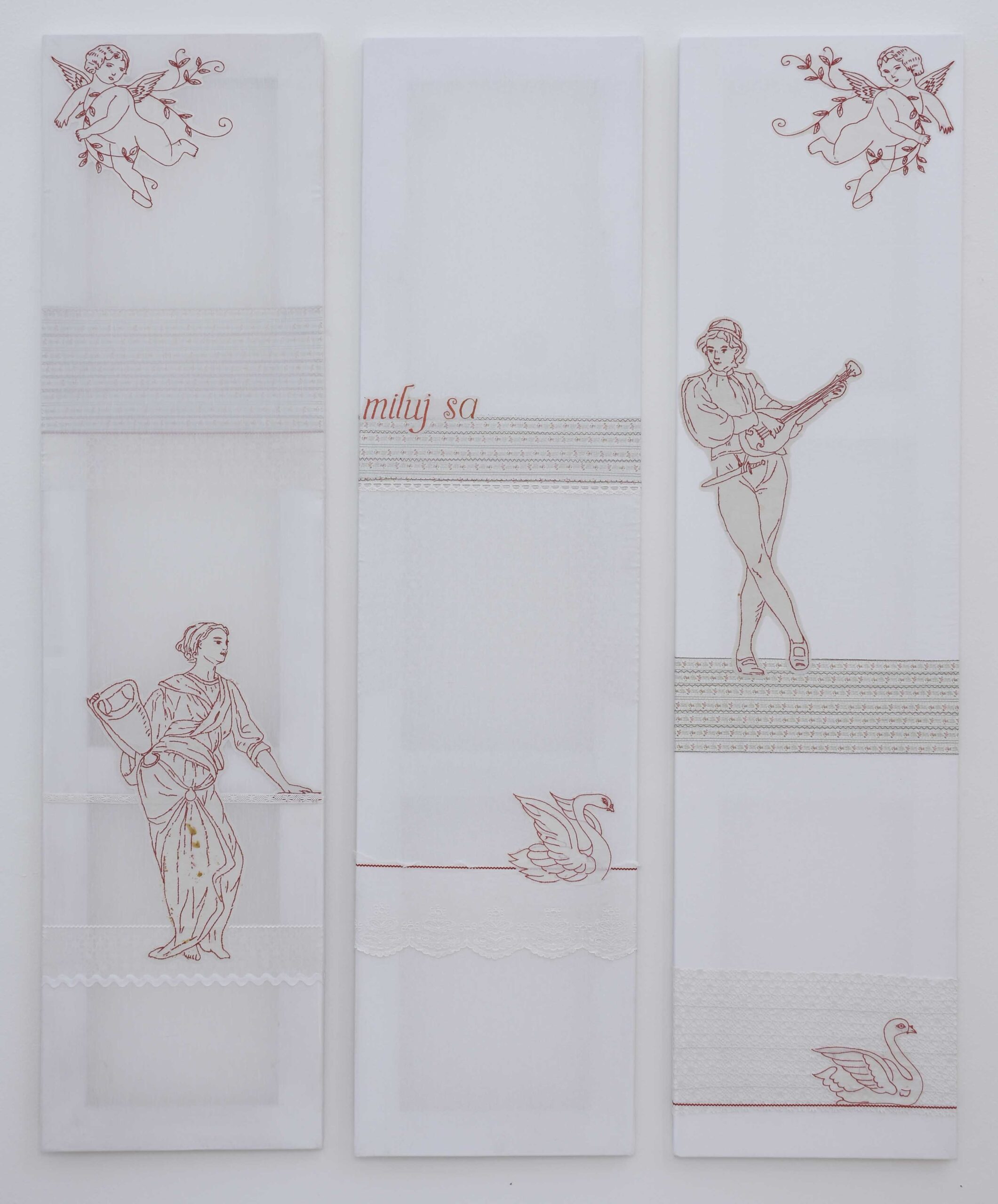
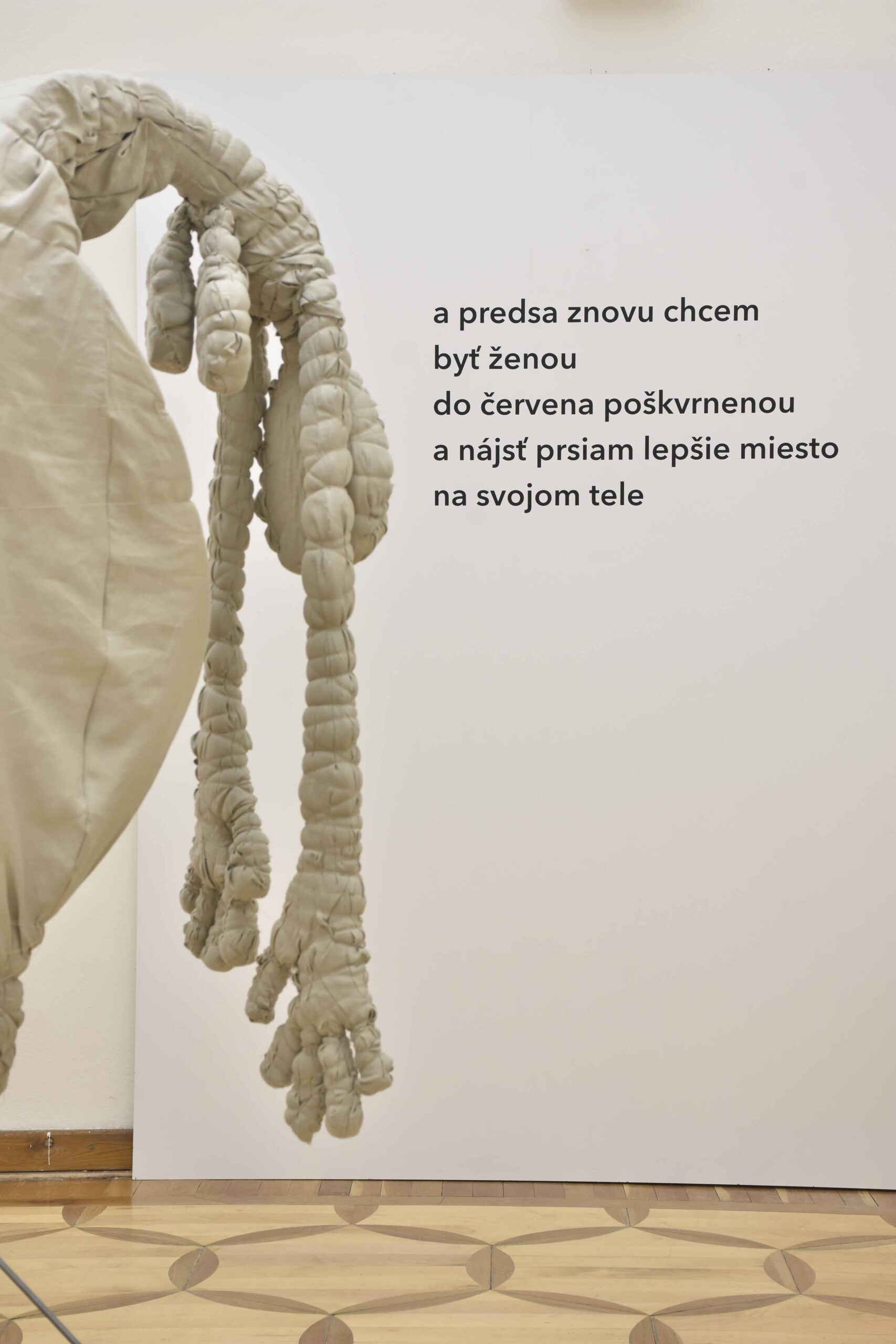
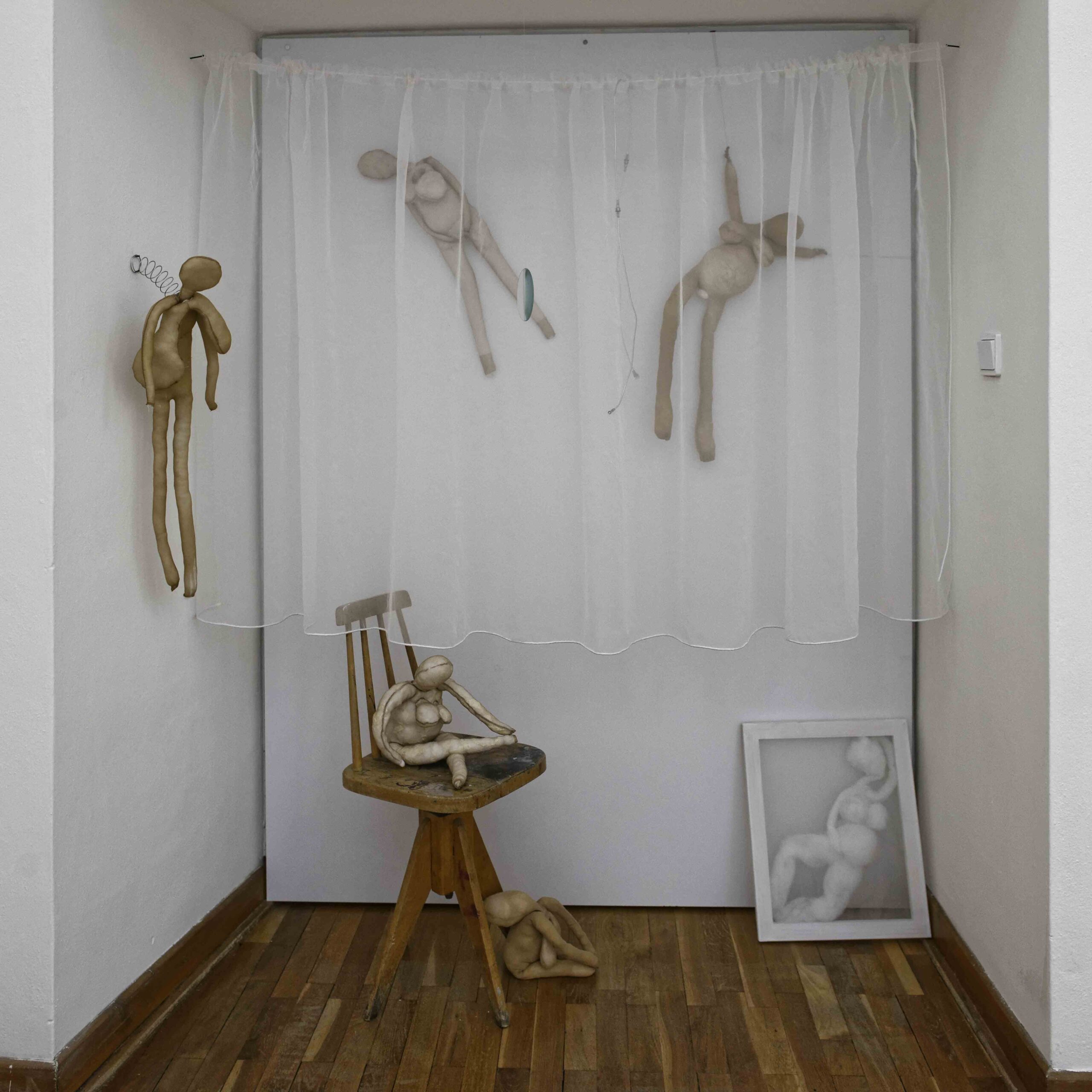
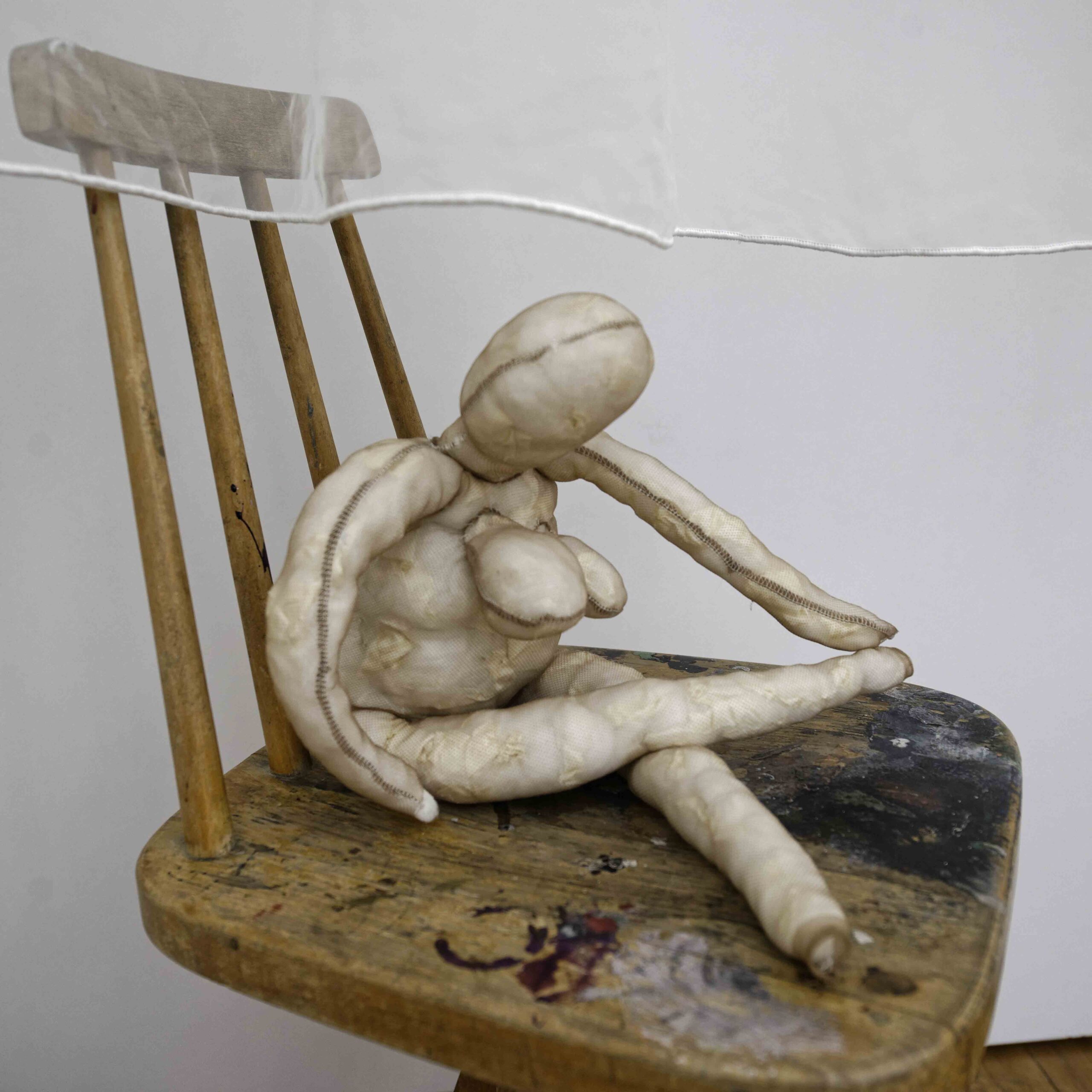
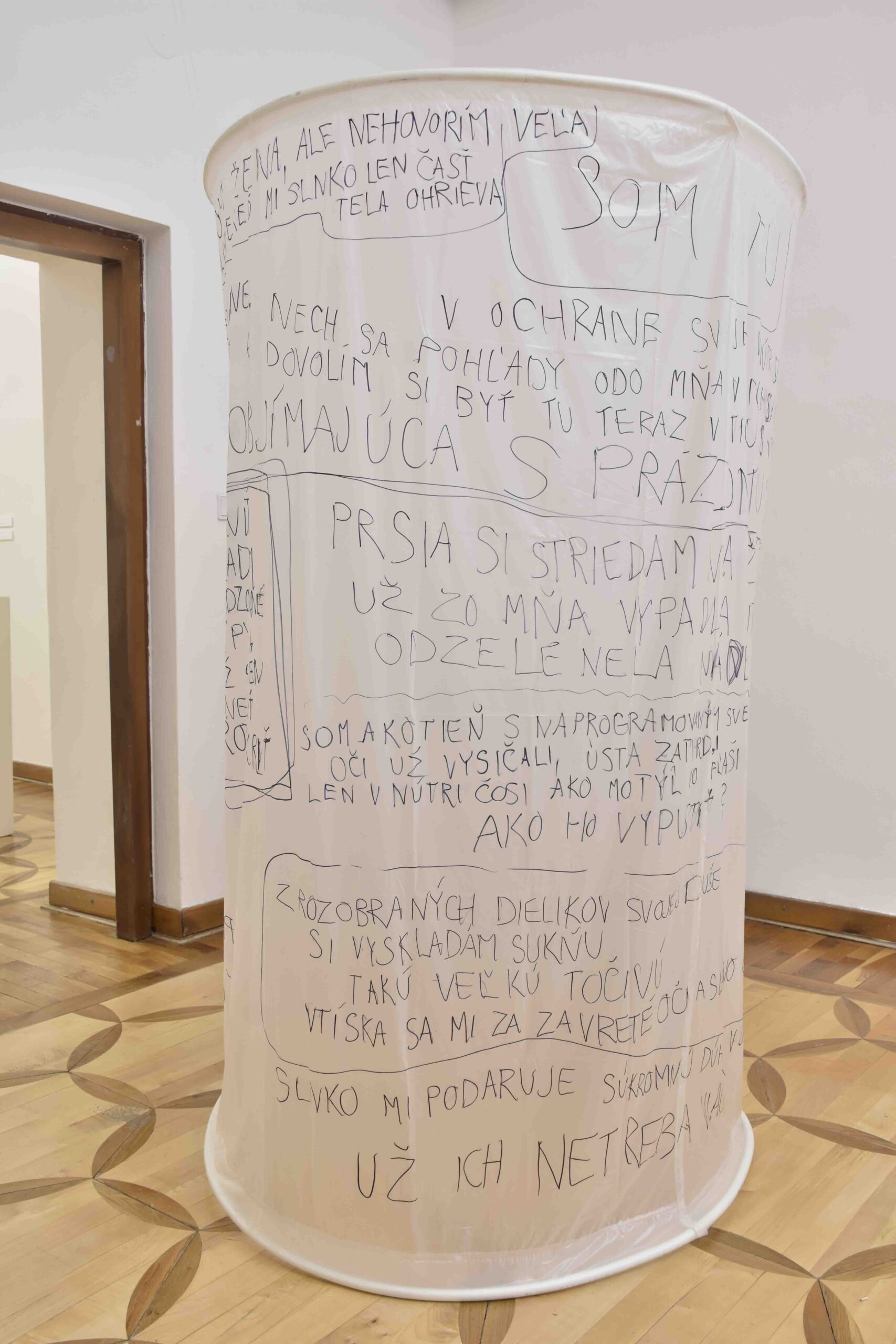
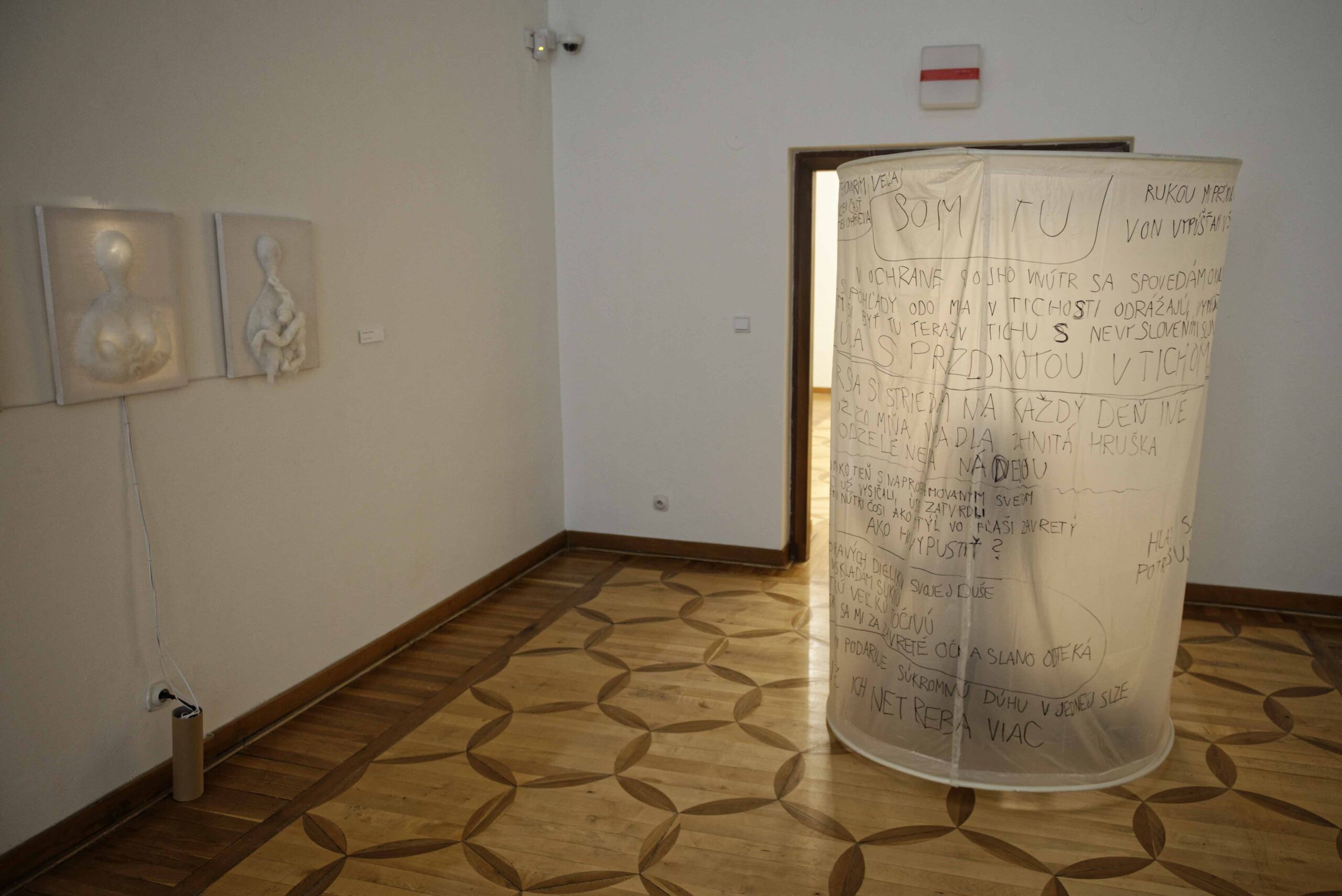
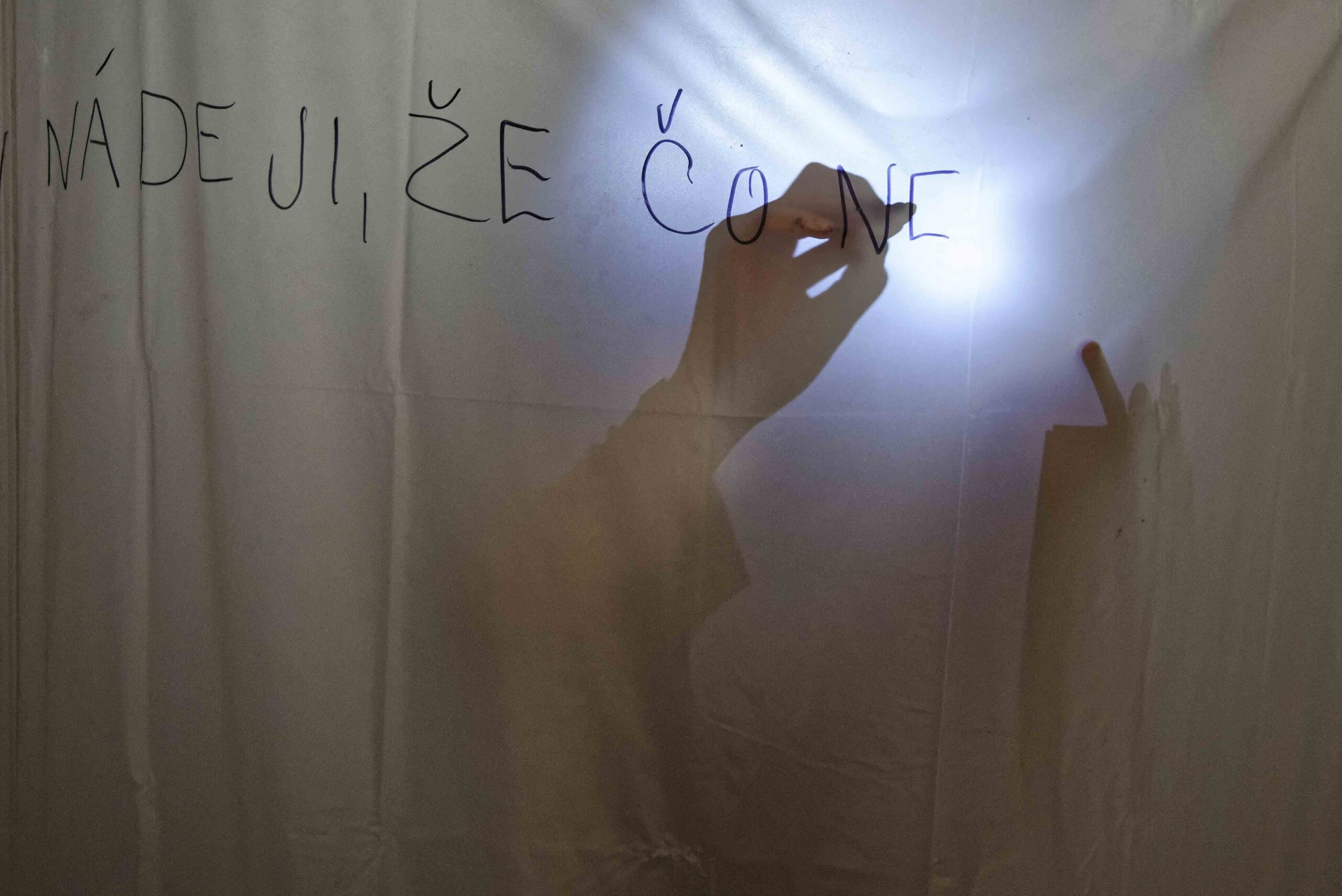
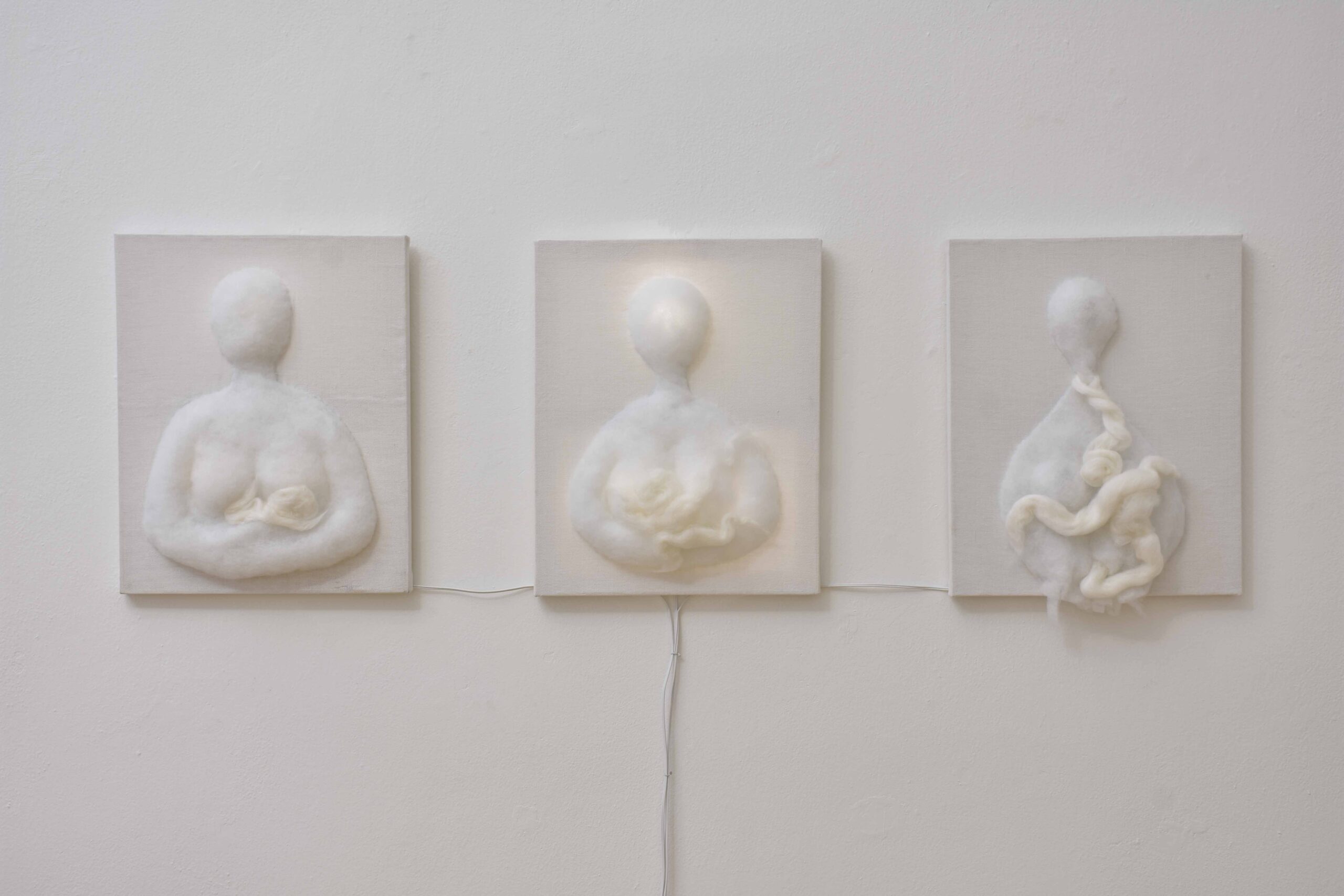
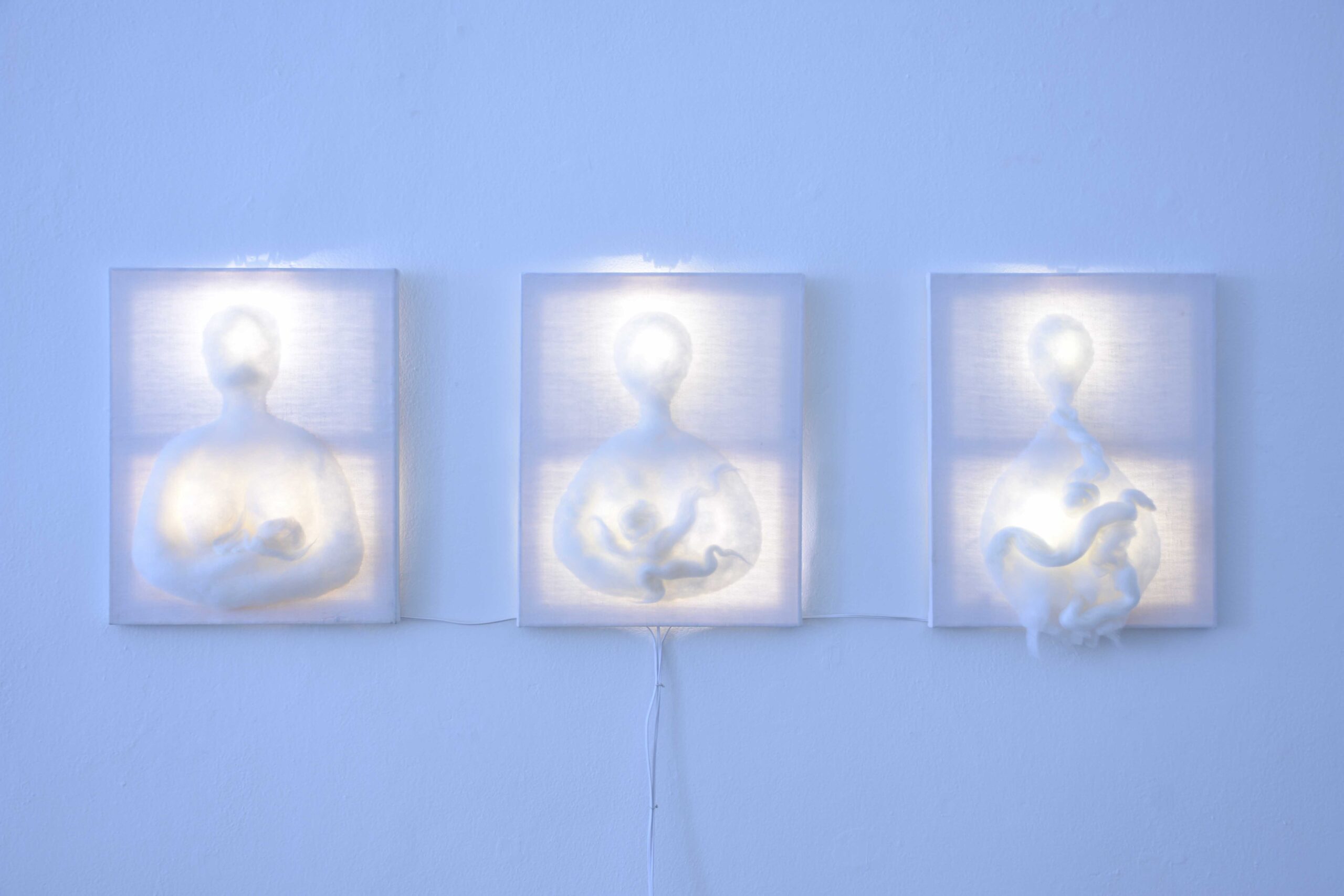
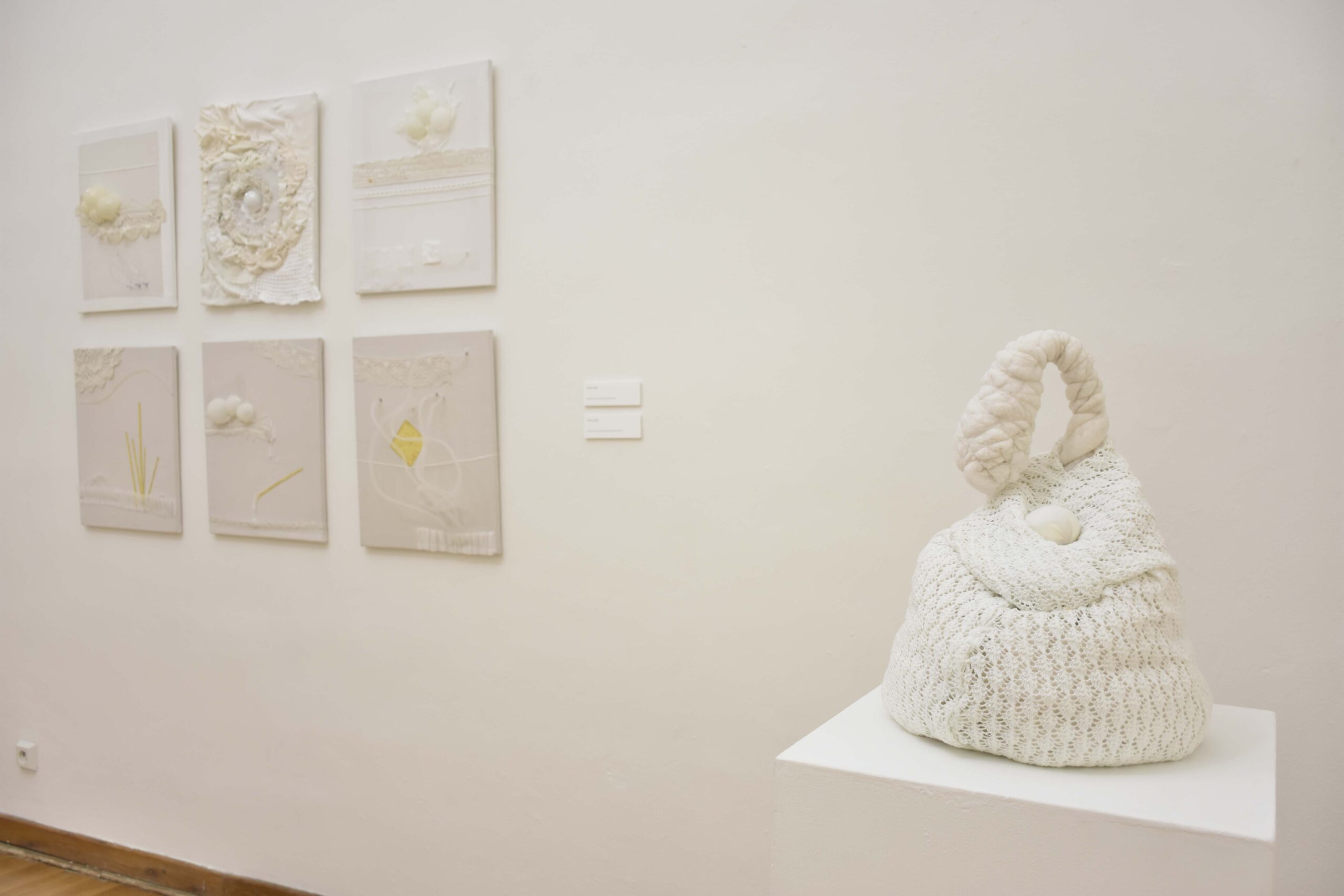
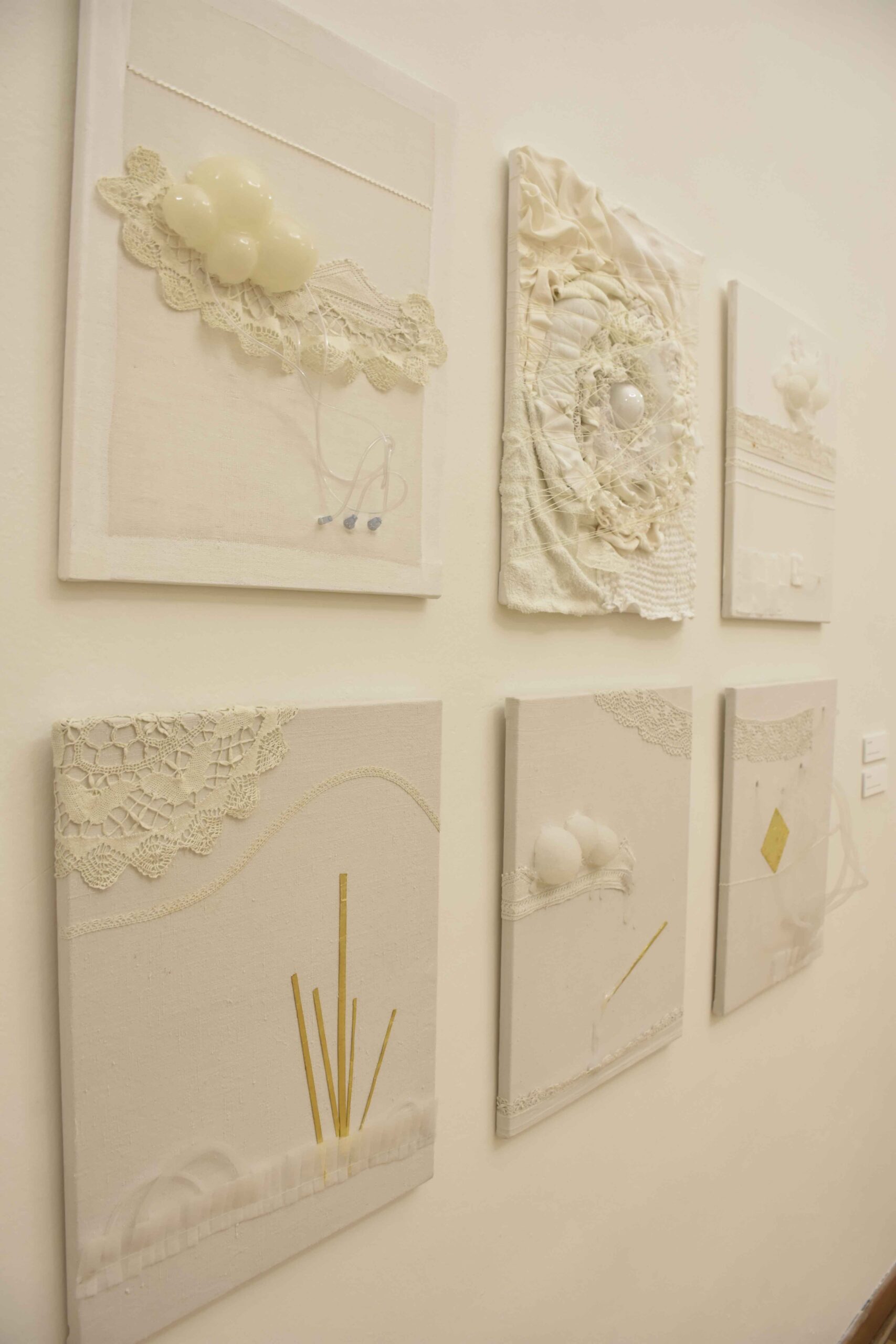
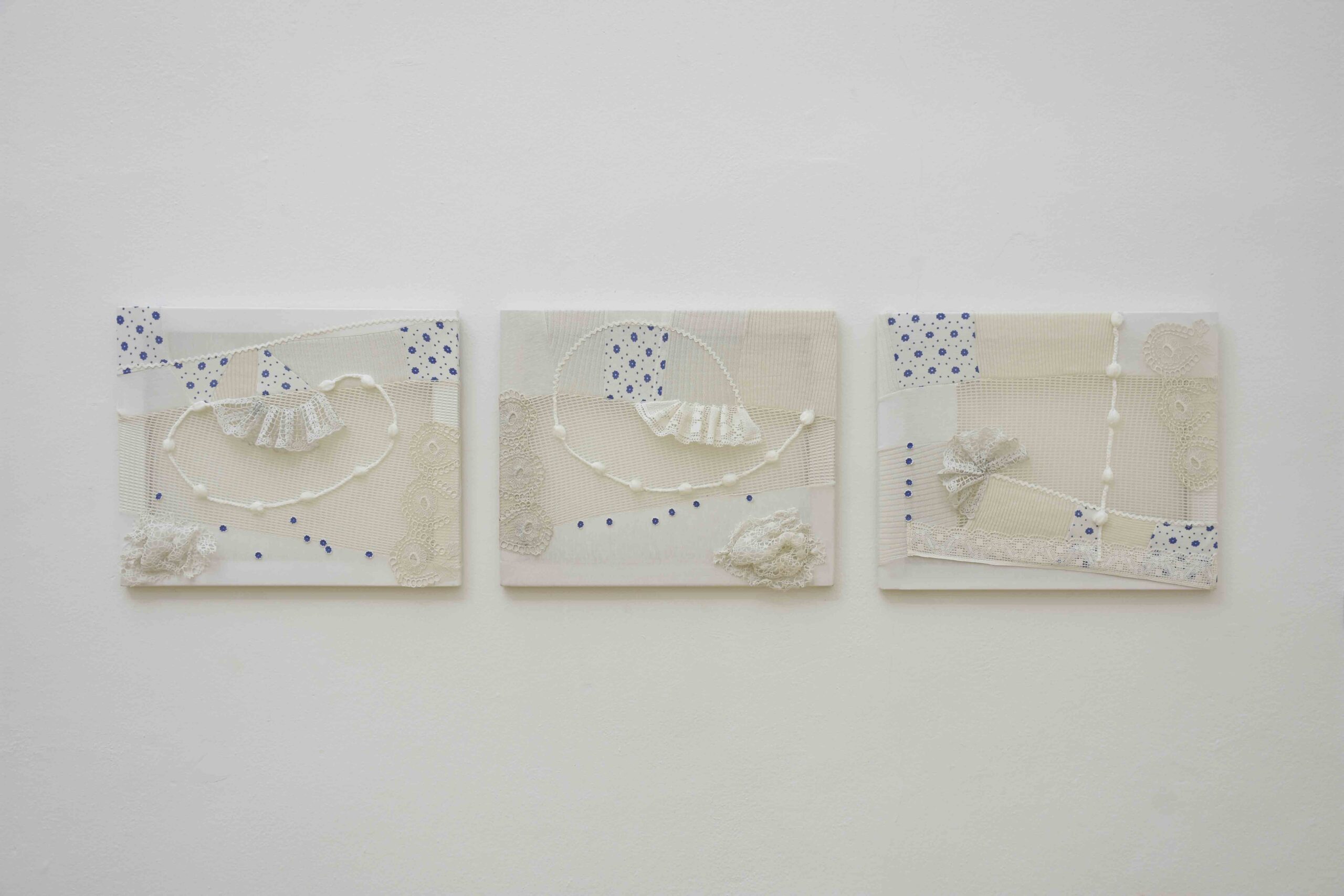
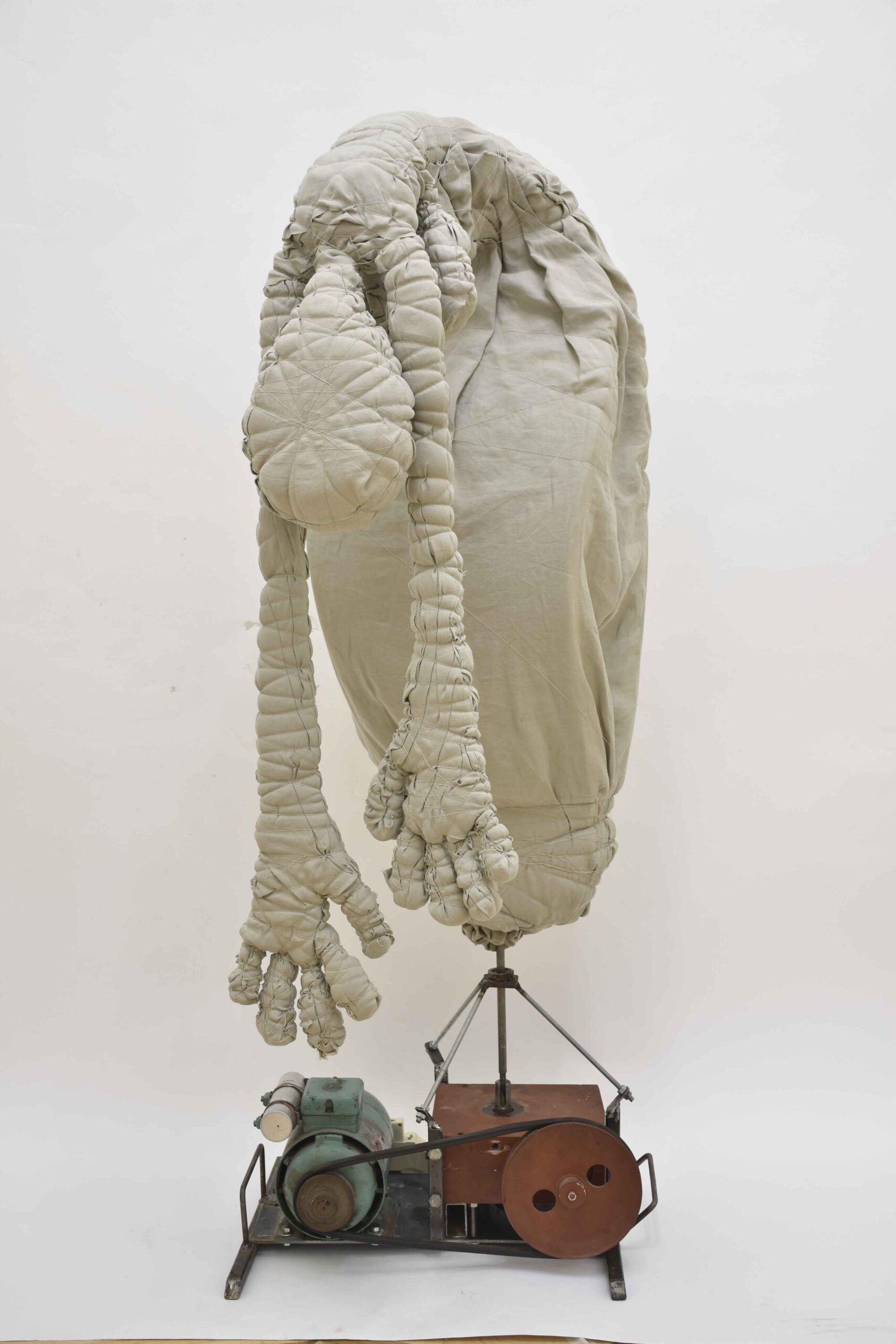
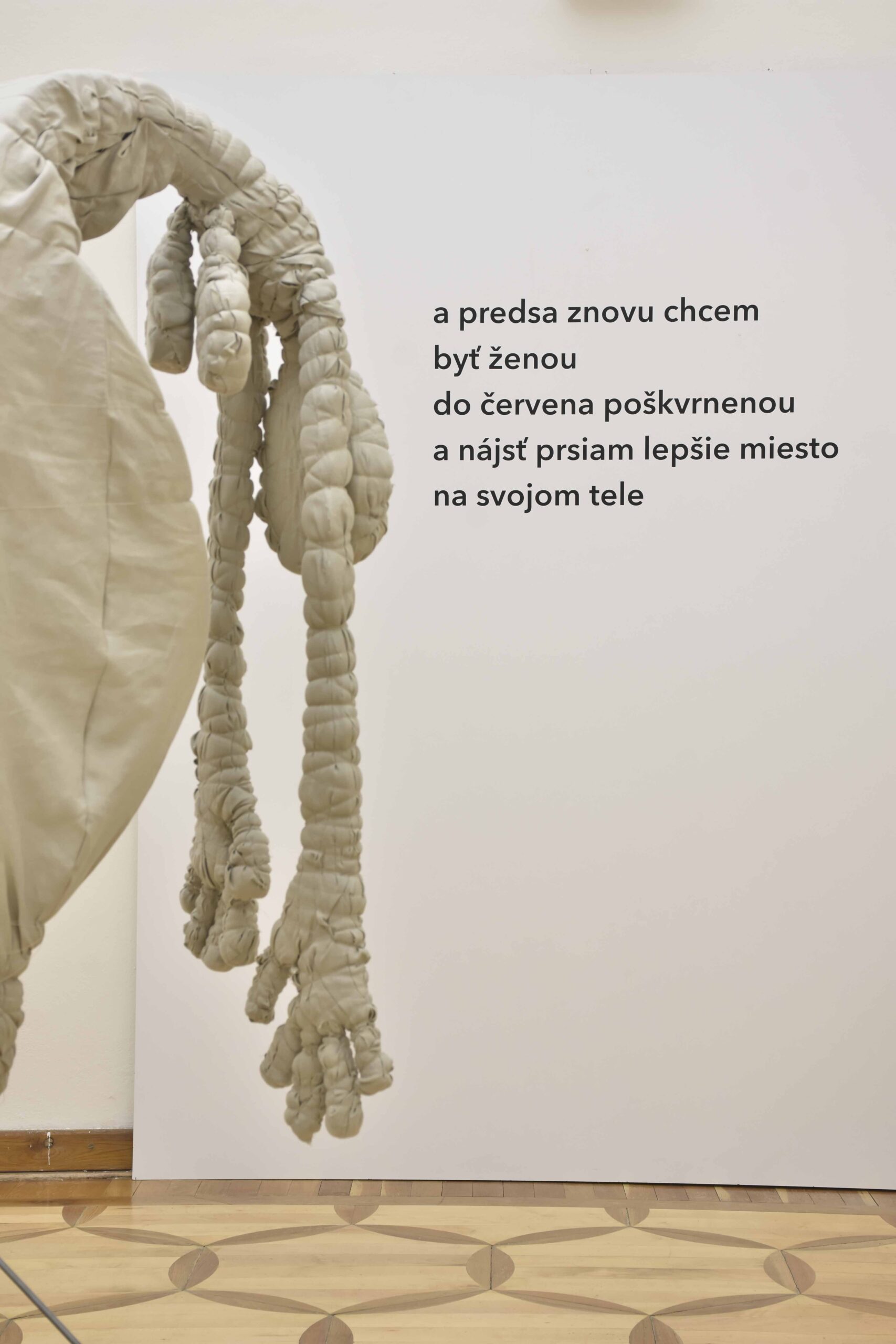
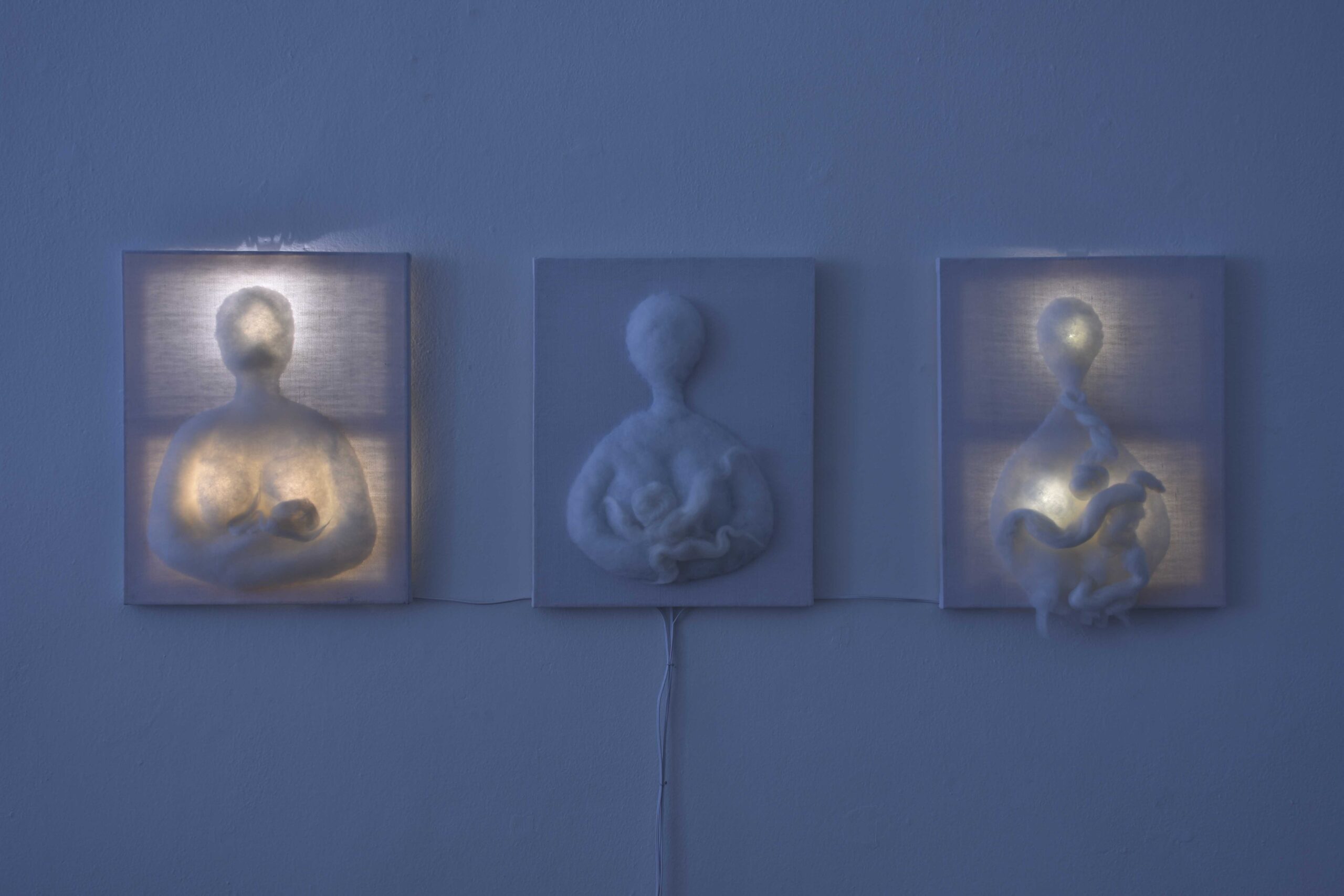
The young Slovak artist Ľudmila A. Valenčíková (*1980) creates her own, a little bit binding space of identity. She models a series of encounters of objects, sculptures, reliefs and interactive installations. It is concerned a formatting of a coherent visual environment, where there is a special “sensing” of her intimate and imaginary space, which acquires a soft and fluid nature. Not only for the involvement of most soft and temporary materials (textiles, lace, wadding, foam, polystyrene crumb, silicone, nets, stockings, and found items), but also for their feminine poetics and flow of texts, the variability of situations and the transition from intimate discovery of something fragile and vulnerable to clouding, secrecy and non-communicability of the (un)told. The exhibition Space IN(dentity) thus brings an imaginative “stitched” inner space of a young artist, a woman and a mother – “I no longer talk with my away-flowing belly”…
II. Symbolic space
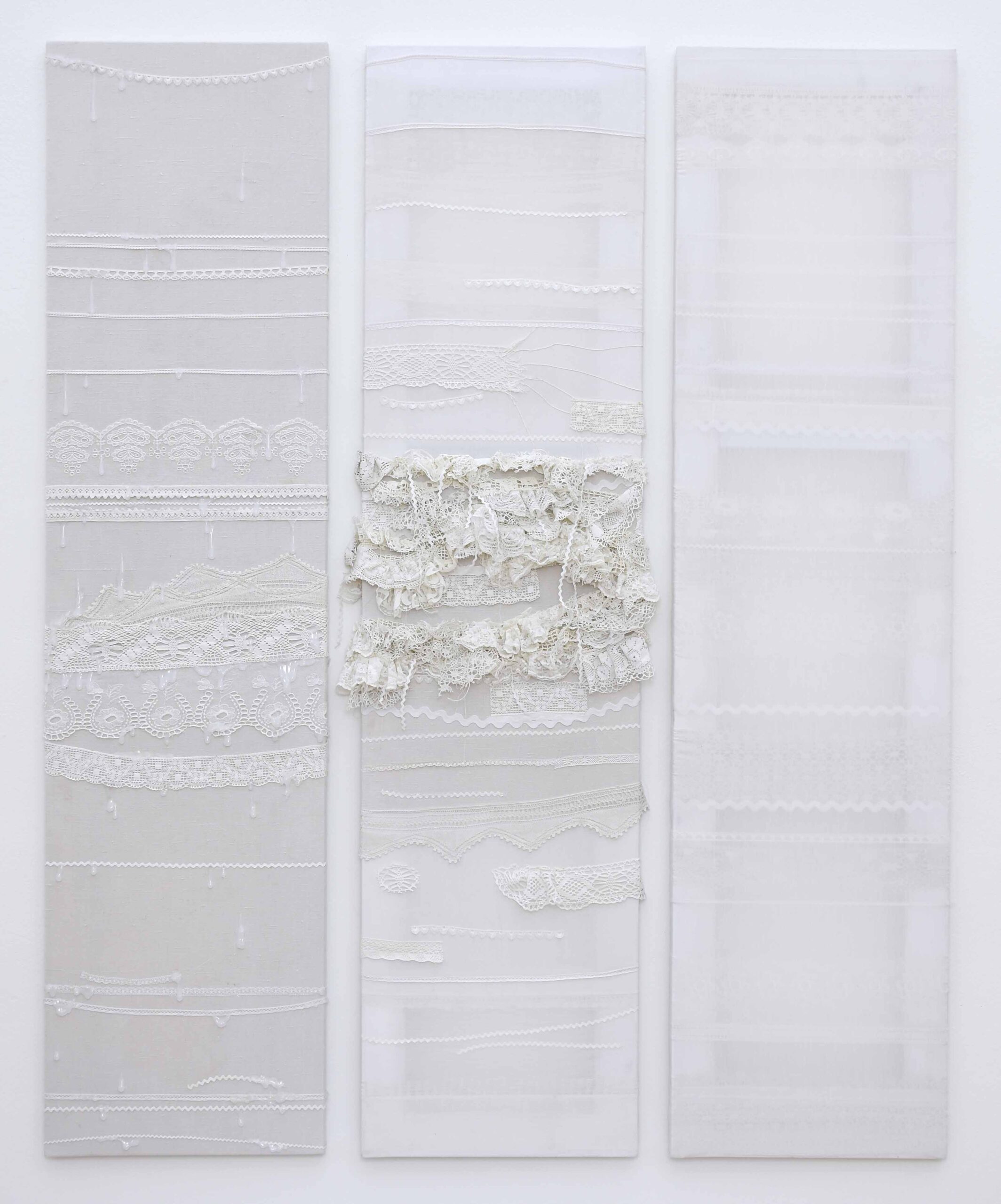
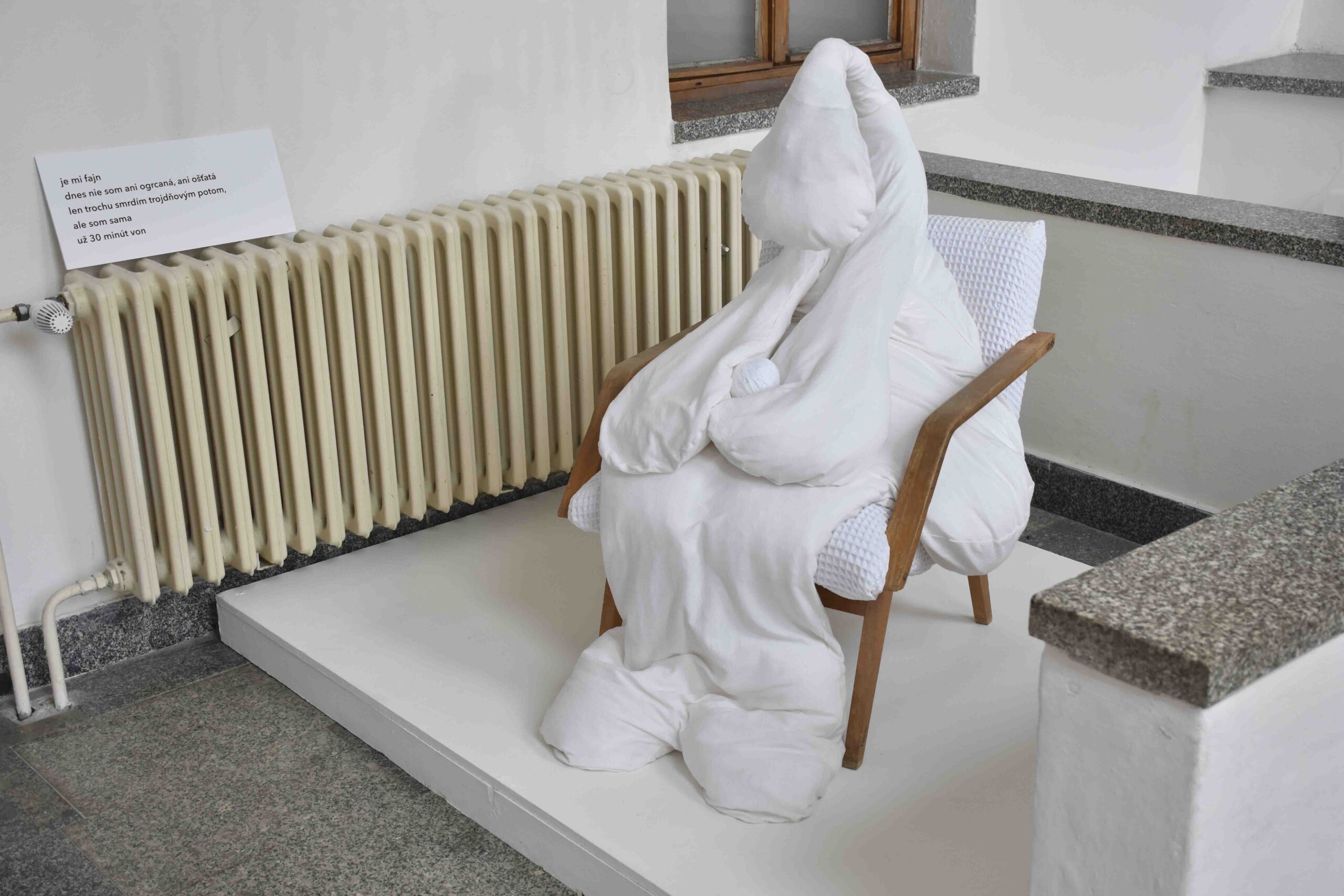
Amalka presents this personal space “as a demarcation of the emotional need for “protection””, filters data, mixes feelings and transposes the sculptural form to a new symbolic level. She induces certain spiritual states in bodily form and materialization. On the one hand, she presents the archaic consciousness and “breathing” of matter (metaphorically expresses fertility, motherhood, great-grandmother’s archetype, male and female power “let’s stop them, sisters”) and on the other hand she brings physical sensuality and suffering (corporeality, symbol of rhombus and egg, tired body, nursing, etc. ). Finally, the colourless materials and the ubiquitous white (tarpaulin, lace, wadding, plaster, cotton wool) speak of this – it is a quiet symbolic landscape of freshly snow-covered innocence, prenatal purity and the immaculateness of linen canvas from grandma. The domesticated area in question recalls the individual stops of tribulation and trials on the path of life and art with a cut-off exclamation: “(Have a pity) and love yourself”.
III. Personal statement, confession and answer
Amalka’s self-reflective space brings something fabulous, nice and lacelike, but also hurtful and disturbingly painful – “how many stitches, so many scars on the soul…”. It is rarely authentic and existential (perhaps even unavailable to men). There is something melancholy, shy and silent, a little closed and unfinished – “I will dive into emptiness and cool down…”, but also emotionally charged and expansive captivating – “I expand in space until I get lost…”.
b.skid